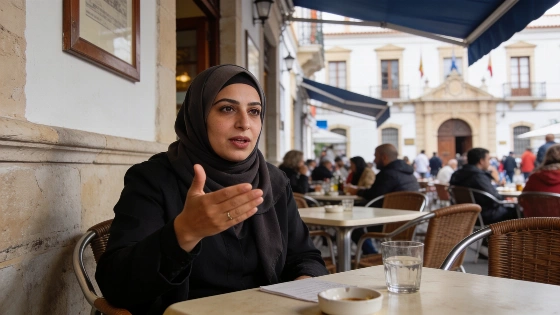
Ceuta’s migrant crisis has triggered sharp criticism of both local and national authorities. Fátima Hamed accuses Madrid of neglect and warns of rising tensions. The city’s fragile coexistence is under pressure as solutions remain elusive.
Ceuta’s social fabric is under strain as the city’s migrant crisis drags on. Fátima Hamed, leader of the Movimiento por la Dignidad y la Ciudadanía (MDyC), has openly criticized both Madrid and the local administration for failing to act. She says government promises have not led to real solutions, leaving residents and thousands of migrants in limbo.
Hamed argues that Ceuta has become a political bargaining chip, with national leaders using the city’s situation for partisan gain instead of addressing urgent needs. “Ceuta deserves to be at the top of every political agenda,” she says, pointing to the lack of a coordinated state policy and the absence of real dialogue between parties. Many in the city share her frustration, having watched the government’s initial declarations of a national emergency fade into bureaucracy.
AP
The city’s mix of Christian, Muslim, Jewish, and Hindu communities is being tested. Hamed, the first Muslim woman to lead a political party in Ceuta, has faced hostility from far-right groups who have tried to exploit the crisis by stoking fear and division. She warns that these groups have targeted residents, sometimes mistaking locals for migrants based on appearance or religion, and subjecting them to verbal abuse. The risk of further escalation is real.
On the ground, the city’s response has been inconsistent. Hamed points to the lack of a clear plan for managing the influx of 10,000 to 12,000 migrants, many of whom remain in precarious conditions. She says the local administration has not provided safe spaces for the most vulnerable, including women and minors. In some cases, she says, minors have been forced into prostitution—a situation she calls deeply alarming and a direct result of institutional neglect.
Grassroots solidarity has filled some of the gaps left by official inaction. Neighborhoods like El Príncipe and Sidi Embarek, with large Muslim populations, have stepped in to shelter vulnerable migrants, especially women and children. Hamed calls this response “admirable but unfair,” noting that those with the least resources have been forced to shoulder the greatest burden. Meanwhile, the city’s police and Guardia Civil remain understaffed, a problem Hamed says she has seen since her days as a legal aid lawyer in 2006. Promised improvements to infrastructure and resources have not materialized.
European Union and AP
Public frustration is growing. Many residents are disappointed by the perceived absence of national leaders, including the visit by the Reyes, which failed to meet local expectations. Hamed is blunt: “People in Ceuta will not forgive Sánchez for going on holiday while the city suffered.” She is also skeptical of the government’s economic aid packages and customs integration plans, noting that no timeline has been provided for their implementation.
Calls for unity have been complicated by the presence of radical groups and the politicization of recent demonstrations, especially those held on Ceuta’s autonomy day. Hamed warns that ultra groups from the peninsula have tried to hijack the narrative, presenting themselves as the only solution while offering little substance. The city’s own protests have been restrained, with organizers wary of their demands being distorted or co-opted.
As the crisis continues, Hamed urges caution against speculation and insists on the need for full transparency. She acknowledges the emotional toll, describing moments of silent solidarity among friends and neighbors. Many feel abandoned by both Madrid and local authorities. This echoes the fallout from previous government disputes, such as the resignation of a local chief after a CNI migrant warning, as reported earlier.
Ceuta’s situation is not just a local issue. It tests Spain’s ability to manage its borders, uphold its values, and protect its most vulnerable. The city’s experience shows the limits of political rhetoric when not matched by action. As long as authorities treat Ceuta as a peripheral concern, the risk of deeper social fractures will grow. Without a real commitment to coordinated policy and immediate support, Ceuta’s wounds will remain open and the promise of coexistence will remain out of reach.