Gonzalo Sanz steps down as chief of staff in Ceuta after a clash over whether he relayed a CNI warning about mass irregular migration. The resignation exposes deep divisions inside the local government.
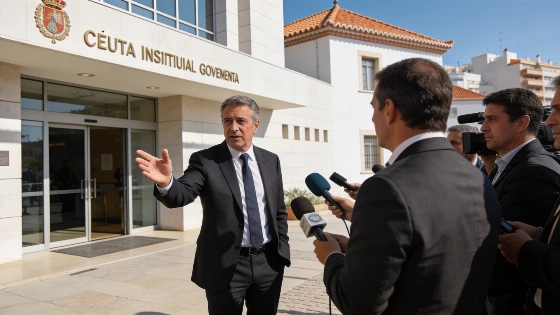
Ceuta’s city government is in turmoil after Gonzalo Sanz resigned as chief of staff to the government delegate. His departure follows weeks of tension over whether he passed on a key warning from Spain’s intelligence agency, the CNI, before a massive influx of irregular migrants.
The dispute centers on a single message. Declassified documents from La Moncloa show that a CNI agent sent Sanz information about a coordinated call on social media for migrants to enter Ceuta. Sanz says he relayed this alert to his boss, Miguel Ángel Pérez Triano, on July 29. Pérez Triano denies ever receiving it, arguing that only formal, sealed CNI reports count as official communication—not WhatsApp messages to junior staff.
The CNI warning referenced two social media groups with a combined audience of around 180,000, highlighting the scale of coordination via WhatsApp and Facebook.
The disagreement became public after government files confirmed the CNI’s outreach to Sanz. The delegate’s office quickly called for Sanz’s resignation, which he submitted in a letter to the Secretary General, citing the contradiction between his account and the delegate’s public statements. Sanz is the first senior official to step down since the border crisis began six weeks ago, when between 70,000 and 80,000 migrants entered Ceuta irregularly. According to Reuters and AP, the influx on July 30 was unprecedented, with AP reporting that more than 72,000 people arrived after the CNI’s warning the day before.
Sanz had served as chief of staff under two previous delegates, Cristina Pérez and Rafael García, and stayed on when Pérez Triano took over in February. That continuity ended when the current delegate refused to accept Sanz’s version of events. The government maintains that only formal CNI reports delivered in sealed envelopes to the proper authorities are actionable. Anything less, Pérez Triano says, is just background information. This view is echoed in official statements cited by ARA, where government sources stress that the CNI did not issue a formal alarm but instead communicated informally and made a brief phone call to the delegation and Civil Guard.
The fallout goes beyond individual careers. How the CNI alert was handled has become a flashpoint for broader questions about Spain’s crisis management and internal communication. As reported earlier, the government’s response to the CNI’s WhatsApp warning has already sparked national debate over how seriously such intelligence is treated. Spain's Foreign Minister, José Manuel Albares, said the documents did not provide advance warning of the true scale of the crisis, only that a crossing was possible.
Spanish authorities have identified around 2,000 minors who entered Ceuta during the crisis and are prioritizing family reunification as a solution. The Ministry of Foreign Affairs has also deployed START teams in Ceuta to reinforce assistance for migrants, indicating the long-term impact of the crisis. An official criminal investigation into the mass influx was launched on September 7, reflecting the gravity of the situation.
Ceuta’s migrant crisis has exposed not just the vulnerability of Spain’s borders, but also the lack of trust within its own institutions. When top officials cannot agree on the basic facts of a security warning, the system’s effectiveness suffers. Sanz’s resignation points to a deeper problem: a process where critical alerts can get lost in bureaucracy, and personal credibility is sacrificed to protect official narratives. Unless Spain’s leadership addresses these internal divisions, the risk of future failures remains high.