Spain remains the only major EU country without lobby regulation after Congress votes down the government’s decree. The decision erases new rules for interest groups and widens the gap with France, Germany, and the UK.
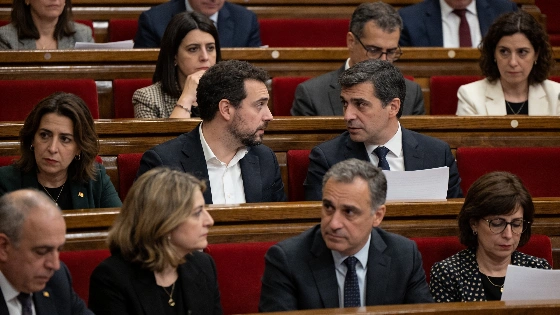
Spain’s effort to regulate lobbying fell apart in Congress, leaving the country as the only major European economy without rules for interest groups. The government’s decree, which had already taken effect, was overturned by 179 votes against, 155 in favor, and 12 abstentions. The Partido Popular, Vox, Junts, and UPN voted no, while PNV and Podemos abstained. With the vote, the new rules disappeared and Spain’s gap with France, Germany, and the UK grew wider. EFE reported that opposition from PP, Vox, and Junts was decisive in blocking the measure.
The decree aimed to bring Spain in line with EU recommendations and international anti-corruption standards. It would have set up a mandatory public register for lobbyists, required transparency about meetings with officials, and imposed fines of up to 40,000 euros for serious violations. The government argued these steps were needed for legal certainty and to unlock EU recovery funds tied to institutional reforms. According to Europapress, about 300 organizations had already applied to the register during its short life.
Democrata
Minister Óscar López, who led the proposal, called the reform urgent for tracking policymaking and strengthening public integrity. He pointed to more than 300 registration requests and 3,000 queries in two weeks as evidence of demand. López also offered to clarify that unions and business associations would not be affected in their social dialogue roles, hoping to win over skeptical allies. These concessions did not change the outcome.
Opposition parties criticized both the content and the process. Edurne Uriarte of the Partido Popular objected to using a decree-law, saying there was no emergency and blaming the government for delays. Josep Maria Cervera of Junts argued the text favored large Ibex-35 companies and consultancies, while making things harder for small firms and non-profits. He also accused the government of using EU funds to bypass parliamentary debate. EFE noted that Junts specifically warned the regulation could complicate work for small companies and NGOs.
Public affairs professionals, including the Asociación de Profesionales de las Relaciones Institucionales (APRI), supported validating the decree despite concerns about the rushed process. They hoped it could be improved through amendments if handled as a regular law. With the vote, the sector faces renewed uncertainty as Spain’s regulatory gap continues.
Democrata
The decree would have applied only to the central administration and its public sector. Its main feature was a free, online register managed by the Council for Transparency and Good Governance. Lobbyists would have needed to register before meeting senior officials or taking part in lawmaking. Registered groups would have had to disclose collaborators who held public office in the previous five years. The law also banned gifts and required officials to publish meeting details within a month. Penalties included fines and bans of up to five years for serious breaches.
Consultancy Rud Pedersen called the vote a missed chance for Spain to meet European standards. They said the ordinary legislative process could still deliver a stable, consensus-based framework within weeks, if there is political will.
Spain now stands apart from its neighbors, where lobby regulation is standard. The lack of clear rules leaves the country exposed to legal uncertainty and risks around transparency. As seen in other European debates, the absence of regulation can fuel controversy and erode public trust.
Spain’s continued failure to regulate lobbying is more than a bureaucratic gap. It shows a reluctance to address the influence of interest groups in policymaking. The government’s approach had problems in both timing and execution, but Congress’s rejection leaves Spain behind its European peers. Without a transparent system, the country remains open to opaque practices and weaker institutional credibility. The next few months will show whether Parliament can break the deadlock and deliver the legal certainty that both the public and the sector are waiting for.