Spain has opened applications for its Auto+ subsidy and published an official list of more than 130 electric and plug-in hybrid models eligible for the scheme’s highest level of financial support. The programme replaces the previous MOVES III incentives and is administered by the Ministry of Industry and Tourism. Its rules cover qualifying vehicles with the DGT’s “CERO” environmental label, including M1 passenger cars, N1 light vans, electric motorcycles and light quadricycles.
The ministry’s “White List” identifies vehicle models and versions eligible for the European-manufacturing component of the support. For a private buyer, the maximum grant for an M1 passenger car is €4,500. That full amount applies to a fully electric vehicle priced below €35,000 before taxes, manufactured or assembled in Europe and meeting the programme’s battery-production condition. The grant starts at €3,375, with reported additions of €675 for vehicle assembly in the European Union and €450 for battery assembly there.
The €4,500 ceiling is not the only price threshold. Eligible M1 cars with up to seven seats can generally cost as much as €45,000 before taxes and after applicable discounts, although vehicles priced above €35,000 may receive a reduced grant. The rules make a special exception for M1 vehicles with eight or nine seats. Passenger cars and light vans must also receive a dealer discount of at least €1,000. Motorcycles are exempt from that requirement.
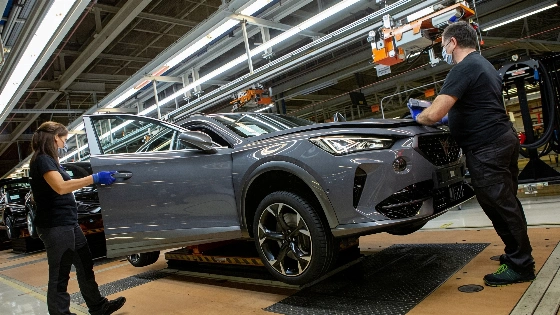
The initial White List, updated as of July 31, included more than 130 models and versions from 28 brands, including electric cars and plug-in hybrids made in Europe. Later updates expanded the register, which is organized by model entries and versions rather than by brand alone: it grew from 395 entries in July to 491 in October. The precise variant matters because eligibility can depend on its price, assembly location and recognized battery-production criteria. Examples on the list include the Abarth 500 BEV, BMW i4 eDrive35, CUPRA Born, Citroën ë-C3, Renault Mégane E-Tech, Volkswagen ID.3 and Volvo EX30.
Auto+ also covers some plug-in hybrids and extended-range electric vehicles, provided they meet the programme’s technical requirements. European-assembled plug-in hybrids can receive up to €3,375 in aid. They do not automatically qualify for the top passenger-car grant, which is reserved for vehicles meeting the strongest eligibility conditions. The scheme excludes buses and coaches in categories M2 and M3, along with heavier N2 and N3 trucks.
The European-origin criteria are intended to direct part of the subsidy towards European manufacturing and supply chains. A vehicle’s technical specifications alone do not determine its eligibility: assembly and battery-production criteria can affect access to additional support, even when a comparable model is available from another manufacturing location. Buyers should check the current White List for the specific version they intend to purchase.
The government allocated €400 million to Auto+, with €350 million initially assigned to the private-buyer line. October figures put applications for fully electric vehicles at 51,398 and applications for other electrified vehicles at 30,303, for a combined total of 81,701. Fully electric vehicles accounted for about 62.9% of the reported total. A separate programme update put the remaining balance in the private-buyer allocation at approximately €91.23 million.
The application process for businesses and self-employed buyers is being handled as a separate phase. Under the published rules, maximum support for these applicants reaches €6,000 for an M1 passenger car and €7,500 for an N1 light van. A special regime provides up to €12,000 for certain N1 commercial vehicles and is linked to Article 5.3 and Annex III of Royal Decree 609/2026.
The White List continues to develop as manufacturers submit documentation, making its version-specific entries basic to assessing eligibility. Buyers can also read this report on the initial disruptions to the Auto+ EV subsidy. Spain’s broader push for electric mobility combines consumer support with incentives tied to European production. The programme’s vehicle categories, price limits and manufacturing rules determine how much assistance a particular purchase can receive.