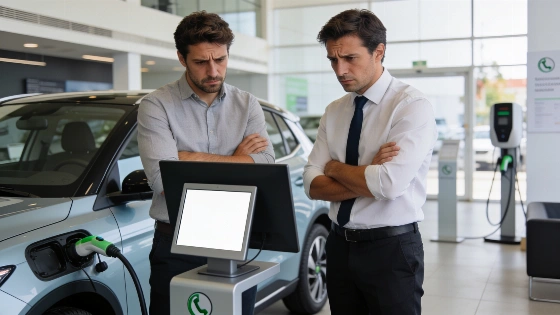
The first day of Spain’s Auto+ subsidy for electrified vehicles was marred by platform failures and missing eligible brands. With funds already in high demand, buyers and dealers are left scrambling for clarity.
On the opening day of Spain’s highly anticipated Auto+ subsidy program, chaos erupted as technical failures and incomplete manufacturer lists left buyers and dealers frustrated. The government’s €350 million initiative, designed to boost the adoption of electric and plug-in hybrid vehicles, was immediately beset by problems that prevented many from accessing the promised incentives.
Applicants reported widespread issues logging into the official platform and, more critically, discovered that several eligible carmakers were missing from the system. Notably, brands such as Ebro, MG, Leapmotor, and Lynk & Co—despite meeting the criteria—were not recognized as eligible, effectively blocking their customers from applying for support. Even among established names, confusion reigned: the Tesla Model 3, a popular choice, was absent from the list, while only the Berlin-produced Tesla Model Y Juniper appeared as an option.
The Auto+ scheme, announced by the government in December 2025 but delayed for nine months, allows private individuals to claim subsidies for vehicles purchased retroactively from January 1, 2026. By mid-July, €246.9 million—about 60% of the total budget—had already been committed to qualifying purchases, leaving just over €150 million available. According to Jordi Hereu, Minister of Industry and Tourism, the government expects that with an additional €400 million, the program can meet demand through the year.
Subsidy amounts are determined by vehicle price and origin. Models priced up to €35,000 (excluding taxes) qualify for 25% of the maximum aid (€1,125), while those between €35,000 and €45,000 are eligible for 15% (€675). Vehicles manufactured in the European Union receive a 15% bonus, and those with EU-made battery components get an extra 10%. For private buyers, the maximum grants reach €4,500 for passenger cars, €5,000 for commercial vehicles, €1,100 for electric motorcycles, and €1,500 for electric quadricycles.
The Ministry of Industry and Tourism plans to introduce a separate Auto+ line for self-employed workers and businesses after the summer, with higher subsidies—up to €6,000 for cars and €7,500 for vans—aimed at accelerating fleet electrification.
Spain’s push for electrification comes as European automakers face mounting competition from Chinese brands and shifting consumer expectations. The current rollout echoes challenges seen in other EV initiatives, where technical and administrative hurdles have slowed adoption. In a recent comparison, the Tesla Model Y demonstrated its real-world range advantage over rivals, highlighting the importance of both policy and product in shaping the market. For more on how leading electric vehicles are performing on Spanish roads, see this recent highway range test.
As the Auto+ program works to resolve its launch issues, the rapid depletion of funds and ongoing technical problems raise questions about the government’s ability to deliver on its green mobility promises. For buyers, the coming weeks will be critical as they navigate both the application process and the evolving landscape of electric vehicle incentives.
According to elespanol motor, the situation underscores the urgent need for robust digital infrastructure and clear communication as Spain accelerates its transition to cleaner transport.