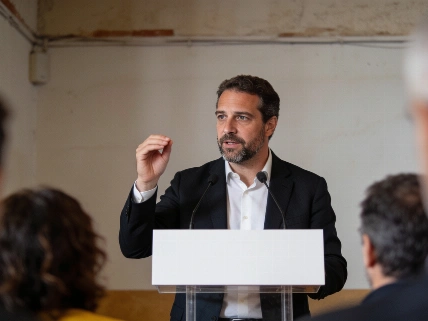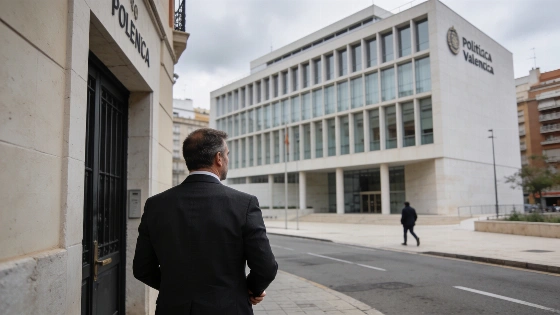
On 22 September, Juan Francisco Pérez Llorca said he was "absolutely calm" about the nomination. He also denied discussing it with Miguel Tellado at their meeting in Madrid. The PP had still not formalised his candidacy between 21 and 26 September, Europa Press reported.
He will enter Monday's Debate on General Policy without a guarantee that he will lead the PP into the next Valencian elections. Génova put off the decision after receiving internal complaints about people close to the president.
The delay has left the regional party without a confirmed leader. Its temporary management body has also exceeded the timetable set by the party's statutes.
The uncertainty is now visible on the party calendar. The PP's National Board will approve a series of regional and provincial congresses for October and November. The schedule includes Galicia, the Community of Madrid, Murcia, Cantabria and the Canary Islands. Provincial congresses are planned in Andalusia, Catalonia and the Basque Country. The Community of Valencia is absent.
That omission is more than a routine scheduling choice. Génova must extend the mandate of the management committee installed in December. Its term expired on 14 July under the party's statutory deadlines.
A regional congress could reignite the internal fight that has divided one of the PP's basic federations. Europa Press and elDiario.es reported that the Valencian PP still had no date for the congress. So, the national leadership has greater control over party management and candidate selection.
Complaints focus on Pérez Llorca's circle. Internal rivals have questioned people who worked closely with him during Carlos Mazón's government. One name raised is lawyer David Serra, a former senior figure in the Valencian PP.
Serra was convicted in 2018 of electoral offences and falsifying a public document in a Gürtel financing case. He was sentenced to three years and eight months. He did not go to prison.
Before the debate, Consell spokesperson Miguel Barrachina said Pérez Llorca had arrived with all his homework done, pointing to the approval of the 2026 budget and several agreements. The regional government was also advancing a draft land law to replace LOTUP. It would reserve at least 50% of the residential floor area in new public planning instruments for protected housing.
Serra now works as a lawyer and is described as an influential adviser to the president. His firm, Estudi General Advocats i Assesor SLP, was hired by Finestrat Town Hall for 192,000 euros while Pérez Llorca was mayor.
The two men have been friends for years. Serra's wife, Magdalena González de la Red, is vice-president of Les Corts and part of the president's trusted parliamentary circle.
Serra also helped shape Pérez Llorca's team at the Generalitat, earning the nickname "the 12th conseller". He is linked to the Alicante clan of the PP. The group includes Pérez Llorca, La Nucia mayor Bernabé Cano, whose sister Marián Cano is the industry councillor, and Javier Sendra, the regional secretary for infrastructure and mayor of Planes.
Sendra has been a basic figure in awarding emergency works without public tenders after the dana disaster of 29 October 2024. Génova has asked questions about allegations involving Pérez Llorca's wider political network and requested explanations.
The inquiries slowed the national timetable.
Feijóo's secretary-general, Miguel Tellado, is not considered close to Pérez Llorca. The president has harboured resentment since the period when he served as Mazón's number two in the party.
That history adds weight to the national decision. Pérez Llorca is waiting for political backing as internal alternatives attract attention. After the Madrid meeting, the PP said the two men had discussed ordinary matters affecting the Valencian region and the PPCV. The party did not describe the meeting as confirmation of the candidacy.
Vicente Mompó, president of Valencia's provincial government and the provincial PP, is mentioned as a possible rival. Susana Camarero, the Generalitat's vice-president and a former secretary of state, is another name in circulation.
No clear replacement has emerged. Pérez Llorca remains the most likely choice if Génova finds no stronger option.
The delay is unsettling parts of the Valencian party. Local voices say the prolonged provisional arrangement damages the brand, gives opponents material to use and encourages succession manoeuvres.
The recent precedent offers little comfort. Alberto Fabra was confirmed as the PP candidate only two months before the May 2015 regional elections.
The issue extends beyond a delayed nomination. The same national leadership is holding back its final decision on the candidate while extending the body that runs the regional organisation.
That concentration of authority recalls the political dynamic described in an earlier media report, though the two cases involve different institutions.
Génova may avoid an immediate congress battle. But the delay carries a cost: it exposes the federation's divisions before the election campaign has begun.