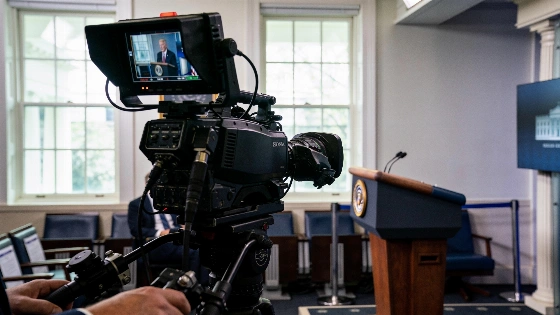
On September 21, 2026, the White House put an existing YouTube video stream under the Trump TV name. NPR and the White House said the platform went live on September 21 and 22. Its first programme was Donald Trump's speech at the celebration of the 250th anniversary of US Independence.
The channel carries administration messages and presidential speeches directly to viewers, with no independent newsroom between them and the White House. The government controls production and distribution.
The White House describes Trump TV as a continuous stream of past moments and administration content, including announcements. It is not presented as a conventional independent news operation. The launch also came amid a fight over which reporters can work inside the White House.
The administration removed the credentials of journalists from CNN, MS NOW and Politico after Trump accused the outlets of spreading false news. On Truth, the President said media organisations should not be allowed to publish what he called fiction and lies.
The three outlets sued the Trump administration over the access ban. NPR reported that some major news organisations then limited pool coverage or declined to distribute Trump's video and audio, in solidarity with the barred newsrooms.
Timothy Kelly ordered the administration to restore the journalists' credentials for 14 days. The court is weighing whether the ban could violate the US Constitution. The ruling leaves the wider dispute unresolved, but limits an executive decision affecting access to the presidency.
NPR, Politico, The New York Times and The Hill described the order as an immediate restoration of access for CNN, MS NOW and Politico.
Edith Rodríguez, president of Reporters Without Borders, described the restriction as a possible breach of the First Amendment, which protects press freedom. María José Canel, a professor of political communication at Universidad Complutense de Madrid, said Trump was trying to build an information environment in which he alone determines what counts as truth.
Her assessment sharpens the significance of the launch. Trump TV gives the administration a way to bypass outlets that challenge its account, as well as a government communication channel. NPR quoted media consultant Mark McKinnon, who described the service as an official White House YouTube platform that continually distributes administration material.
The contrast is sharp: Trump has accumulated a long record of disputed claims during his time in office. The material cited in the dispute includes false economic indicators and altered inflation figures, along with allegations of electoral fraud after his defeat by Biden in the 2020 presidential election.
The White House now presents its own version of events through a channel it controls. At the same time, it attacks the credibility of media organisations beyond its control.
A similar pattern has appeared in television politics elsewhere. A broadcaster's identity can become tied to its political message, as shown in this earlier media analysis. In Washington, the mechanism is more direct: Trump TV distributes presidential content as a court considers whether established reporters can retain access.
A government-controlled platform can deliver speeches and announcements without editorial intervention. It cannot replace independent reporting's constitutional role.
For now, the temporary court order keeps CNN, MS NOW and Politico inside the White House press process. Trump TV launched alongside the ban. The two moves show an administration seeking greater control over distribution while challenging the authority of critical media.
That combination narrows the distance between official messaging and political propaganda. Here, the strongest safeguard is the court's decision to test the access restriction against press freedom.