The University of Missouri had withdrawn the I-20 form that allowed Santi Almarcha Senpau to maintain his student visa. His lawyer, Regina Pitarch, said the university cancelled the document after he enrolled in a semester made up entirely of online classes. The 22-year-old Catalan was then detained by US Immigration and Customs Enforcement (ICE), leaving his legal team to arrange his return to Spain.
ICE said Almarcha was arrested on 15 November 2026 in Suwannee County, northern Florida, after a traffic stop involving the Florida Department of Agriculture. The Department of Homeland Security (DHS) said he had entered the United States legally on 14 January 2026 with temporary authorization. DHS confirmed he had been granted voluntary departure and said he would remain in ICE custody until he left the country.
In an interview with RTVE Noticias, Pitarch said Almarcha had signed a voluntary-departure document and was awaiting removal from the United States. Reports said he signed the paperwork twice; one account said he did so without legal assistance after officers told him it would speed up the process. Pitarch said the procedure was standard. By signing, he waived the opportunity to appear before a judge and could not appeal the deportation after reaching Spain.
DHS said Almarcha had a theft history involving commercial establishments, described in reports as shoplifting. Pitarch disputed the criminal characterization and said the immediate immigration problem followed the University of Missouri’s cancellation of his I-20 after his online-only enrollment. She had no confirmed date for a flight. DHS said cooperation between federal and state agencies, including in Florida, had resulted in about 40,000 arrests of migrants in irregular status.
According to the account Almarcha gave through his legal representatives, he had not been told that the university had withdrawn his I-20. He was detained while helping friends move, and officers asked him to sign a document they said would speed up his case. Pitarch said the procedure was standard, but she had no confirmed date for a flight.
She reported that the Spanish government and Almarcha’s family had offered to pay for his flight, but US authorities said they had to manage the process themselves. Pitarch said officials had not obstructed the case, though they had provided little information. She also said the detention conditions were taking a toll: by the time of the interview, Almarcha had spent roughly 14 days in custody at an ICE detention center in Georgia, after reportedly being transferred from a facility in Suwannee County. He had only recently been allowed into the courtyard and described the food as poor.
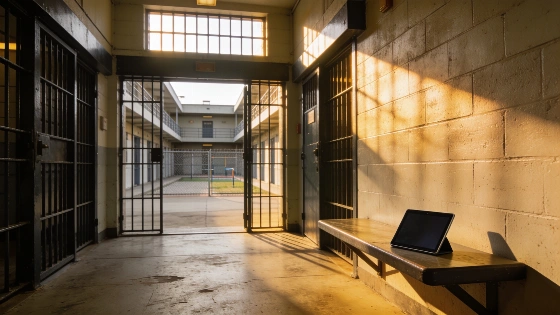
Pitarch said the facility was divided into about 20 units, each holding between 100 and 150 people, according to information she received from an officer. Detainees shared an iPad to contact relatives and could use six phones if money had been placed in their accounts. She said she could not arrange a confidential phone line with Almarcha, limiting what she felt able to discuss with him.
His lawyer said he hoped to finish his university course online after returning home. She also reported that the Generalitat and Spanish government representatives in the United States were supporting the family and seeking to facilitate his return. RUSSPAIN has separately covered a Madrid Assembly dispute involving a hospital photograph.
As of 27 November 2026, Almarcha remained in immigration custody awaiting departure, with no confirmed return date. The interview account does not establish whether he was later deported.