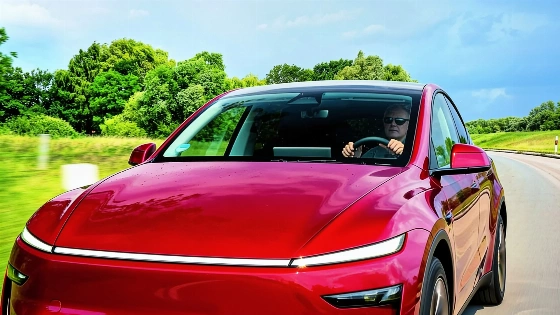
A real-world highway test has put the Tesla Model Y Performance ahead of its electric SUV competitors, covering nearly 500 km on a single charge at steady speed. The results highlight how Tesla’s engineering still sets the benchmark for long-distance EV travel.
With a full battery and a clear stretch of highway, the Tesla Model Y Performance has demonstrated why it remains a reference point in the electric vehicle market. In a recent endurance test, the Model Y was driven at a constant 113 km/h until its battery was depleted, revealing a real-world range that outperformed even its most direct competitors.
The test, conducted by Out of Spec, saw the Model Y Performance cover approximately 499 kilometers before coming to a stop. This figure not only matches but slightly exceeds its official WLTP rating of 492 kilometers, a rare achievement for electric vehicles under real driving conditions. The test was designed to be straightforward: charge the car to 100% and drive at a steady speed until the battery is empty, eliminating variables that often complicate range comparisons.
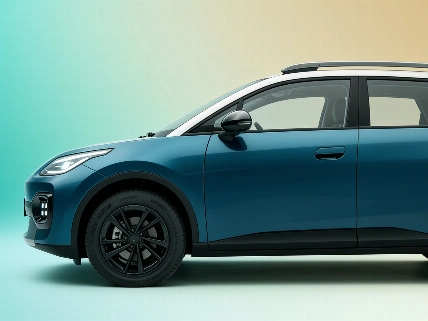
For context, the same test included the Rivian R2, a new electric SUV with a more rugged design and a strong market presence. Despite its robust image and advanced features, the Rivian R2 managed only 407 kilometers under identical conditions. The difference underscores the impact of aerodynamics and software optimization, areas where Tesla continues to invest heavily.
While the Model Y Performance is not the most range-focused version in Tesla’s lineup, its combination of battery technology, aerodynamic design, and efficient power management allows it to deliver impressive results. The vehicle accelerates from 0 to 100 km/h in just 3.3 seconds and reaches a top speed of 250 km/h, yet still manages to keep energy consumption remarkably low at highway speeds.
One of the key factors behind this efficiency is the Model Y’s shape. Although its rounded profile has drawn criticism for aesthetics, it helps the car cut through air more effectively, reducing drag and extending range. In contrast, SUVs with boxier or off-road-inspired designs often sacrifice efficiency for style, leading to higher consumption and shorter real-world range.
For drivers planning long journeys, these differences matter. A car that can travel further between charges not only saves time but also reduces the anxiety associated with finding charging stations on the road. Tesla’s extensive Supercharger network further strengthens its position, making the Model Y a practical choice for those who rely on their EV as a primary vehicle.
It’s worth noting that while many electric cars perform well in city driving, highway efficiency is a tougher challenge. As speed increases, aerodynamic resistance becomes a dominant factor, and only the most optimized vehicles maintain strong range figures. This is where Tesla’s engineering focus pays off, as highlighted in the recent test.
For those interested in how regulatory changes may affect Tesla and other EV makers, recent developments in US safety standards are also shaping the industry. For example, new federal rules on emergency exits are set to impact future models, even as Tesla avoids a formal investigation into its Model 3 door mechanisms.
As electric vehicles become more common on Spanish roads, real-world range and charging convenience are increasingly decisive factors for buyers. The latest results from the Model Y Performance suggest that, for now, Tesla’s blend of technology and infrastructure continues to set the pace in the EV race.