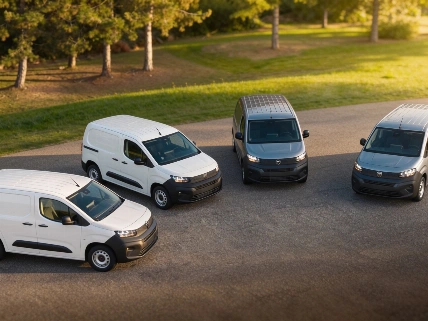
Rafael Ruiz collected the Innovation Award at the XVI edition of 'La Noche de la Economía', held at CaixaForum in Madrid and organised by elEconomista.es. Ebro Motors Group said at the ceremony that it had built 40,000 vehicles since starting operations.
The company also reported 2,000 direct employees and around 4,000 jobs including indirect roles. Its plan sets out €400 million in investment to adapt its facilities and production capacity for new-generation vehicles. That is a planned investment, not money identified as already spent. Separately, Ebro signed a financing agreement of up to €200 million for a new P2 paint line and additional production lines at the Zona Franca plant. The facility has a 10-year term and a three-year grace period; its fixed interest rate is 2.65%. The first reported drawdown was €35 million.
Ruiz used his award speech to make the case for a carmaker with Spanish headquarters and capital. He said, in Spanish: «España ha sido y es el segundo productor de automóviles de Europa, pero, sin embargo, no tenemos marcas con sede en nuestro país y con capital de nuestro país». In translation, Spain has been and remains Europe's second-largest car producer, but has no brands headquartered and funded in the country, he said. Spain produced 2,274,026 vehicles in 2025, including 1,810,331 passenger cars and 463,695 commercial and industrial vehicles, according to ANFAC figures. Production was 4.3% lower than in 2024. The country exported about 85.8% of its output; Europe received 92.6% of those exports.
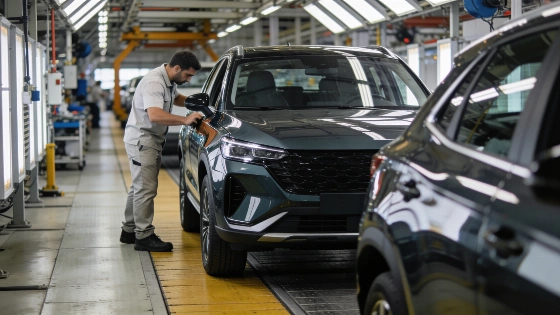
The manufacturing project followed Nissan’s 2020 announcement that it would close its Barcelona factory. The operation shut permanently at the end of 2021, leaving an industrial complex of about 500,000 square metres in Zona Franca. After a public tender, the consortium initially known as Hub Tech Factory, led by EV Motors, won the right to operate the facility and acquired its production assets and machinery in 2023. Ebro began production there in November 2024.
Ebro started two decades earlier as a small company founded by three engineers from the automotive sector. By 2018 and 2019, it had around 400 engineers working on projects in several countries, including work on the energy transition and on electric vehicles and plug-in hybrids.
That engineering background shaped plans to recover the former Nissan site and the Ebro name, which has nearly 70 years of history in Spain. A reindustrialisation commitment was signed in 2023 with trade unions and public administrations involved. The project aimed to restore industrial activity and bring back workers left unemployed after Nissan’s closure. Ebro retains majority ownership of Ebro Factory. China’s Chery contributes vehicle platforms and technology, and assembles its own vehicles at the site, including models associated with the Omoda brand.
Ebro also reported a Spanish market share above 3% after one year of its new phase. It said electrified vehicles accounted for 90% of its sales in Spain, including hybrids and plug-in hybrids. A separate example of Spanish car production is the Navarra-built Skoda Epiq, covered in this earlier report.