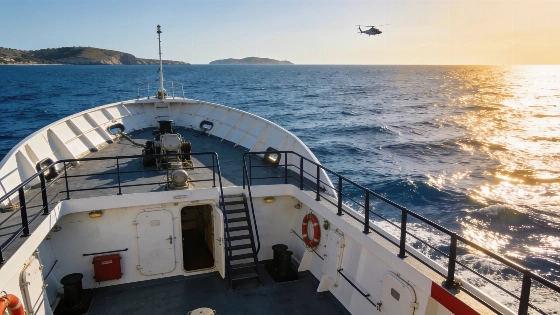
The Med Emre was carrying 7,000 tonnes of diesel, roughly eight million litres, when it capsized 30 nautical miles north of Ibiza, in a Mediterranean area of high ecological value. One of its 17 crew members, the chief engineer, died, according to a statement from owner YMN Tankers reported by AFP.
Spain’s transport ministry announced on Friday, 27 November, that the vessel would be towed to Cartagena. Officials selected the port in the region of Murcia because it had the depth and structural strength needed for cargo extraction. It also offered room for the work and the required safety conditions, as well as capacity for subsequent repair or refloating.
The ministry said the decision followed confirmation of the ship’s structural integrity and buoyancy. It also cited the risks of working offshore or at an exposed anchorage, where autumn and winter storms could increase the danger of sinking and pollution. Cartagena’s Escombreras basin was the planned destination. Arrival was expected as early as Monday, 30 November, subject to weather and operational conditions.
Before the decision, a salvage tug had taken divers to inspect the Med Emre. The ministry said the vessel remained stable and was held in position by a line attached to the maritime rescue ship Clara Campoamor. Spain’s prime minister, Pedro Sánchez, said available data showed no fuel was leaking into the sea. The Clara Campoamor began towing the tanker at about 18:00 on Friday. The operation proceeded at very low speed as a precaution against further leakage.
By Saturday, 28 November, the tanker was under tow across the western Mediterranean. Authorities reported no new pollution along the route, while monitoring a low-intensity, weathered fuel slick measuring about 5 by 0.5 nautical miles near the capsizing site. National authorities coordinated the operation with the governments of Murcia and Valencia. The Balearic Islands government also took part, alongside the Port Authority of Cartagena and the shipowner.
The vessel overturned during the night from Wednesday to Thursday. The accident occurred where two protected areas overlap, according to ocean-protection organisation Oceana. Murcia’s regional authorities opposed the decision and reportedly considered legal action, calling the arrival an environmental risk. An earlier report covered Spain’s emergency response to the casualty.
The ministry estimated that removing the cargo and fuel, then refloating the ship, would take several weeks. The incident has revived memories of the Prestige disaster. The tanker sank off Galicia in November 2002, spilling about 63,000 tonnes of fuel and contaminating 2,900 kilometres of coastline.