Markus Haupt, SEAT and CUPRA’s president and chief executive, is due to meet Indra chairman Ángel Simón in Barcelona on 1 December to discuss a memorandum of understanding between the companies. Expansión reported on 27 November that the two sides had reached a preliminary understanding to examine opportunities in civilian and defence markets. The meeting is expected to set a framework for possible joint projects, not confirm production.
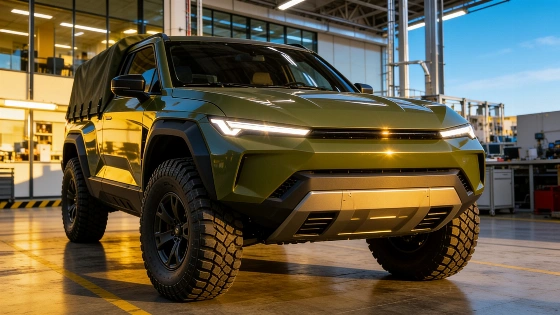
According to Expansión and El Día, the companies are considering work on dual-use technology, which has civilian as well as military applications. Potential areas include engineering, development, manufacturing and maintenance, alongside military vehicles and drones. Options under discussion include prototypes and engineering projects. Possible vehicle work could involve crewed or autonomous platforms. Neither company has announced a firm manufacturing commitment, a specific investment or a production programme.
That distinction matters for Martorell. The factory has been discussed as a possible site for making non-combat military vehicles, but the proposed memorandum is meant to assess opportunities. It does not establish that production would take place there.
Haupt has previously said that the Government of Spain and the Generalitat de Cataluña had asked SEAT to take part in strategic defence initiatives. The company has been open to examining proposals if they offer a commercially viable opportunity. It is also in talks with technology companies, including Aggity, about possible drone-manufacturing projects.
The discussions are part of a wider exploration of defence-related work across the Volkswagen Group, which owns SEAT and CUPRA. In September 2026, Volkswagen Nutzfahrzeuge chief Stefan Mecha said the company had long built dual-use goods for police, Germany’s Federal Agency for Technical Relief and the armed forces. Military-sector activity has also been linked to the future industrial use of Volkswagen’s Osnabrück plant in Germany.
Indra presented its Forward2030 strategy on 25 November 2026, organizing the group around Defence and Space, Smart Technology, and Critical Infrastructures. The plan names artificial intelligence, advanced electronics, sensors, communications, quantum technologies, autonomous systems and directed energy as priority areas. Indra’s group-wide target is to more than double revenue compared with its level at the end of 2025. That target belongs to its corporate strategy; it is not a value assigned to the proposed SEAT cooperation. SEAT’s engineering and industrial automation experience could be relevant to potential projects.
Separately, RUSSPAIN.COM has covered the UCO contract inquiry into anti-abuse bracelets, a distinct public-procurement case involving contracts worth €102.6 million.
For SEAT, any defence work would need to make commercial sense without displacing investment in electric mobility. The source article identifies Martorell’s potential role in producing affordable electric cars for Europe as a strategic opportunity. Neither an investment nor a manufacturing commitment for the proposed SEAT–Indra cooperation has been announced.