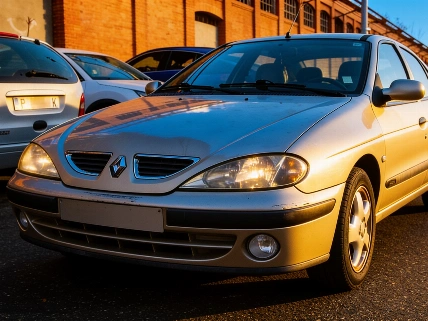
The DGT’s estimate of around 80,000 abandoned vehicles in Spain combines annual figures with a separate count of cars already left on private property. For a car occupying a communal garage space, an administrative procedure can lead to its removal without a civil case, as long as the required evidence and notice are supplied.
The figures appeared in Revista DGT on 16 December 2022. They comprise about 50,000 vehicles abandoned on public roads each year, roughly 6,000 left annually at workshops and other sites, including depots and public car parks, and an estimated 20,000 in private premises. The first two are yearly flows; the private-property figure is a stock. Added together, they make 76,000, rounded to around 80,000 rather than presented as a precise census.
The procedure for private premises comes from DGT Instruction VEH 2022/26, signed by Pere Navarro on 29 September 2022. The DGT lists the instruction as current and says it concerns the residual treatment of abandoned vehicles under Article 106 of the Traffic Law. Article 106 addresses the destruction and decontamination of vehicles abandoned by their owners; the instruction covers destruction or assignment to traffic-surveillance and traffic-control services. Annex I forms part of the instruction’s associated material. This administrative process is distinct from simply towing a vehicle: a municipal recovery truck cannot enter a private garage as it would operate on a public road.
In a communal garage, the owner or person responsible for the premises applies to the Provincial Traffic Headquarters. The application needs photographs of the vehicle and an official record showing that it has been abandoned for at least two months. This can be a certificate from the property administrator or minutes from the owners’ meeting where that specific vehicle was discussed. The applicant must also provide a notarial record stating the circumstances and the car’s actual location.
The applicant must show that the registered owner was asked to remove the vehicle. The DGT instruction includes a model notice; using a delivery method that leaves proof matters because the evidence must accompany the application. A resident whose space is occupied should start with the community administrator, not arrange a private tow.
Once the application arrives, the Jefatura contacts the vehicle’s owner and allows one month for removal. If the owner is unknown or cannot be reached, the notice is published in the BOE. After the deadline, the authority considers any response before deciding whether to authorise transfer to an authorised treatment centre for depollution and scrapping. Approval is not automatic.
The rules for public roads differ. Under Article 106.1.b, the vehicle must have remained in the same place for more than a month and must either have damage that prevents it from moving under its own power or be missing its number plates. Dust or a flat tyre alone does not establish abandonment. The local authority checks the circumstances and gives the owner one month to remove the car before it can order treatment at an authorised centre.
Reports about vehicle status can involve different administrative issues: a Gibraltar MOT report concerned vehicles without valid certificates, not abandoned cars. The DGT estimates here should not be read as a count of vehicles currently abandoned in Spain.
A public paid car park has a separate threshold. Under Article 6 of Law 40/2002, its operator may seek residual treatment when a vehicle has remained continuously in the same place for more than six months and abandonment can reasonably be presumed. The operator must provide the evidence. A customer who notices the vehicle should contact the car park company.
For a vehicle on a public street, report it to the local council or Local Police, using the 092 number where available or the council’s online reporting service if it has one. The national Traffic Law sets no single fine for abandonment; any penalty depends on the relevant municipal ordinance.