The Spanish government plans to require individuals to prove the legal origin of large sums of cash if not declared. The measure reverses the burden of proof and introduces stricter penalties for violations.
The Spanish government is preparing a significant shift in how large cash movements are regulated, both within the country and across its borders. Under a new draft law targeting money laundering, terrorism financing, and the proliferation of weapons of mass destruction, individuals caught with substantial amounts of undeclared cash will now be required to prove the legal origin of those funds. This marks a reversal from the current system, where authorities must demonstrate that seized money is illicit.
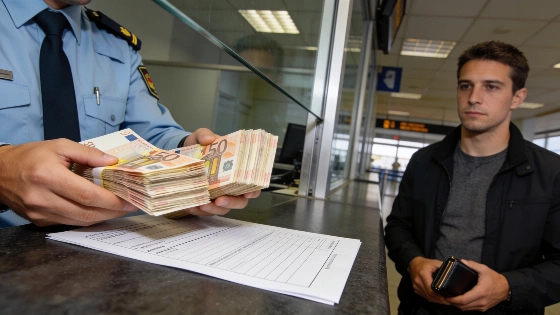
Currently, anyone moving €100,000 or more in cash within Spain, or over €10,000 into or out of the country, must file a prior declaration. If this is not done and authorities intervene, the money is temporarily held while officials investigate its origin. If no evidence of illegality is found, the funds are returned. However, the new proposal would make the absence of proof of legality a serious offense in itself, not just an aggravating factor.
The draft law also broadens the definition of 'means of payment' to include not only cash in euros or foreign currency, but also bearer instruments like cheques and promissory notes, prepaid cards not linked to bank accounts, and high-value commodities such as gold or diamonds. The Ministry of Economy has included these changes to reinforce existing restrictions on cash payments in business transactions.
Business groups have criticized the move, arguing that it presumes undeclared cash is illegal and undermines the presumption of innocence. The association Denaria claims the law unfairly equates legal tender with fraud and places the burden of proof on citizens rather than tax authorities. They argue that the obligation to prove the lawful origin of funds stigmatizes cash payments and should be removed from the legislation.
Importantly, the law states that simply filing a declaration is not enough; if the information provided is incomplete or inaccurate, the obligation is considered unmet. This means discrepancies between declared and actual amounts can still trigger sanctions.
Restrictions on cash payments in commercial transactions remain unchanged. Payments of €1,000 or more between businesses or professionals must be made by bank transfer or card, not in cash. For non-residents without a Spanish tax address, the limit is €10,000. These rules are part of Spain's ongoing efforts to combat fraud and money laundering, as seen in other recent government actions such as the sale of high-value assets by regional authorities.
Spain's approach reflects a broader European trend toward stricter oversight of cash flows, especially in the context of cross-border transactions and anti-fraud measures. The creation of a new anti-money laundering authority, Anifi, is expected to centralize enforcement and improve coordination. While the government argues these steps are necessary to close loopholes exploited for illicit purposes, critics warn of potential overreach and the risk of penalizing legitimate cash users. As the legislative process continues, the debate over privacy, presumption of innocence, and the future of cash in Spain is likely to intensify.