A 21-year-old Spanish student was killed during an academic exchange in Morelos. Authorities are treating the case as femicide. The incident has sparked demands for justice and raised concerns about safety for foreign students.
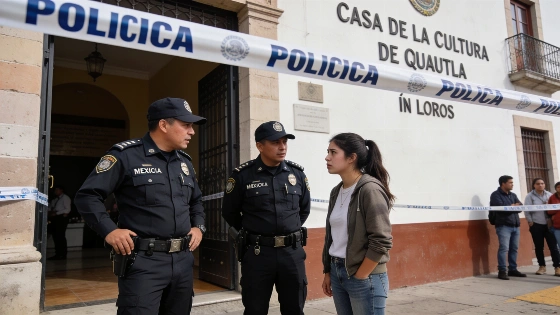
The death of Claudia Tacoronte Aguilera, a 21-year-old Spanish exchange student in Mexico, has put authorities in Morelos under intense scrutiny. Claudia was attacked during a public event at the Casa de la Cultura de Cuautla, and the state prosecutor is treating the case as femicide. The incident has led to official contact between the Morelos government and the Spanish consulate, and both Mexican and Spanish academic communities have responded with outrage.
According to local officials and independent sources, Claudia was attending the Fiesta Nacional de la Planta Medicinal on Saturday, September 12, when she was fatally wounded with a bladed weapon. Early reports suggest a possible robbery, but investigators are following femicide protocols, as confirmed by the Morelos prosecutor's office. The Universidad Autónoma del Estado de Morelos (UAEM), where Claudia was studying as an exchange student from the University of Granada, has condemned the killing and called for a thorough investigation that takes gender-based violence into account. Both Mexican and Spanish academic circles have echoed these demands.
Cuautla, where the incident occurred, is located about 100 km south of Mexico City and the case has drawn international attention due to the involvement of a Spanish student and cross-border institutional cooperation.
UAEM released a statement expressing "profound indignation" and offered condolences to Claudia’s family, her classmates, and the University of Granada. The university has activated its crisis response, staying in contact with the victim’s relatives and Spanish consular officials. UAEM has also urged the Morelos prosecutor’s office to act quickly and transparently, stressing the need to avoid impunity in a region where violence against women is a persistent problem. Reports from EFE and other agencies confirm that the Spanish consulate in Mexico is in regular contact with both the family and Mexican authorities as the investigation continues.
Governor Margarita González Saravia said that state officials are working with the Spanish consulate and have made support for the victim’s family a priority. She stated that the investigation began immediately, following all required protocols. The governor also promised to improve security for women, young people, and the university community in Morelos, acknowledging that the case has broader implications for public safety and international academic exchanges. Official statements from the Morelos government emphasize the urgency of the investigation.
State prosecutor Fernando Blumenkron confirmed that the case is being handled as femicide from the start, in line with procedures for any violent death of a woman in the state. He said investigators are following leads but did not share further details while the inquiry is ongoing. According to Democrata and other news outlets, while there is a theory that robbery may have been involved, authorities have not confirmed this as the motive and continue to focus on the femicide protocol.
UAEM and local authorities have publicly insisted on a transparent and exhaustive investigation with a gender perspective, emphasizing that the outcome could influence future safety measures for women and students in the region. The university has also maintained direct contact with the University of Granada and Spanish consular officials to support the victim's family and ensure international cooperation.
The murder of a foreign student in a public cultural space has renewed debate about the safety of international students in Mexico, especially in areas where gender-based violence is a known risk. The strong response from institutions and the demand for a gender-sensitive investigation reflect growing pressure on authorities to deliver results and restore trust in the region’s ability to protect both visitors and residents. This case follows other high-profile incidents that have tested the capacity of local institutions to respond to violent crime, as seen in other recent reported earlier.
Spain’s academic and diplomatic communities are closely watching the investigation, with the University of Granada and Spanish officials coordinating with their Mexican counterparts. The case highlights the vulnerability of exchange students and the need for stronger safety measures in host countries. As the investigation continues, its outcome will be seen as a test of how Mexican authorities handle crimes against foreign nationals and address ongoing violence against women. Morelos officials now face pressure to deliver justice for Claudia Tacoronte Aguilera and to demonstrate that their institutions can protect those who come to study and work in the region.