The workshop where Miquel Navarro created many of his large-scale sculptures opened to the public in Mislata in June 2026. Navarro, a leading figure in Spanish sculpture, died on 1 November 2026 aged 81 after a long illness, according to reports by EFE and Europa Press, which cited sources close to him.
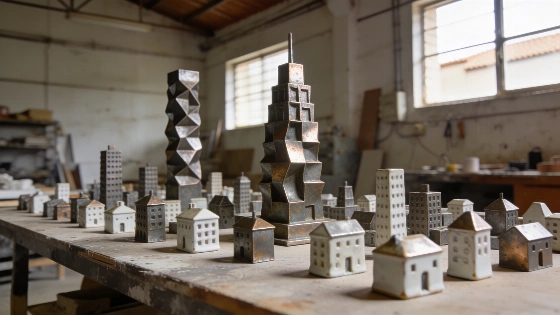
The Casa Taller now houses more than 400 works donated by the artist. Its collection includes 81 sculptures, 83 photographs, 51 watercolours and 53 serigraphs, along with paintings, drawings, collages, posters and films. The 980-square-metre site also has a library and space for temporary exhibitions and research. For decades, Navarro worked in the former warehouse, which he acquired in the 1980s in Mislata’s Morería district. The restoration retained original features, including the building’s roofs and walls.
Mislata announced three days of official mourning after Navarro’s death. Municipal flags will fly at half-mast until 3 November at 23:59, and a public viewing was scheduled for 2 November at the Casa Taller. The municipality described him as an artist whose roots had become a legacy for the world.
Born in Mislata in 1945, Navarro trained at Valencia’s Escuela de Bellas Artes de San Carlos. He began as a painter but turned almost entirely to sculpture from 1972, while continuing to work in drawing, engraving and photography, among other media. His career helped establish him as a leading figure in the Nueva Escultura Española, or New Spanish Sculpture.
His «Ciudades» became one of the best-known parts of his work. He began developing the series in 1973, arranging hundreds of small, variable pieces into imagined urban landscapes. These brought industrial forms together with rural elements, while also incorporating geometric shapes. Rather than depicting one identifiable city, the modular installations used the city as a recurring metaphor and blurred boundaries between sculpture, architecture, installation and landscape.
Public works also brought his sculpture to a wider audience. In València, these include the works popularly known as Pantera Rosa and Parotet. In Zaragoza, Válvula con alberca was installed on Avenida de Ranillas in 2008. The piece represents water in continuous motion.
Navarro gained international attention through the 1980 group exhibition «New Images from Spain» at the Solomon R. Guggenheim Museum in New York. He received Spain’s National Award for Plastic Arts in 1986 and the Premio Internacional Julio González in 2008. Other honours included the Premio Alfons Roig in 1987 and the Premio CEOE de las Artes in 1990. He also received an ARCO award from the National Association of Art Critics in 1995 and a Generalitat Valenciana cultural-merit distinction in 2002. His work is held by the Guggenheim museums in New York and Bilbao, the Centre Pompidou, the Museo Reina Sofía and the IVAM. In 2005, he donated more than 500 works and artist notebooks to the IVAM, documenting his creative development from 1964 onward.
In 2024, Zaragoza’s Museo Goya presented «Miquel Navarro. Metrópolis lunar», an exhibition of nearly 40 sculptures and collages made between the 1970s and 2024. The show explored power, solitude and human ambition. Three more works were displayed at Mobility City: Ciudad 84-85, Una urbe en tus manos (1998) and Fluido en la urbe (2003).
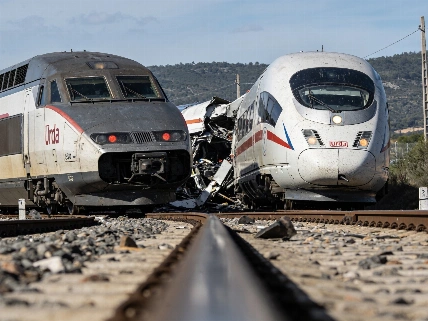
At the Casa Taller presentation, Navarro said he wanted his work «esté reunida, que no esté perdida y que se puede hacer una lectura coherente», which translates from Spanish as a wish for it to be brought together, preserved and made available for a coherent reading. RUSSPAIN.COM has also covered a separate fatal incident in Spain, in its report on the Toledo train crash.