Neanderthals Had Complex Diets and Could Adapt Their Menus Seasonally. Isotope analysis of finds from the Los Aviones cave has revealed that Southern European Neanderthals not only made active use of marine resources, but also skillfully adjusted their diets according to seasonal changes. This challenges old assumptions about the dietary limitations of Neanderthals.
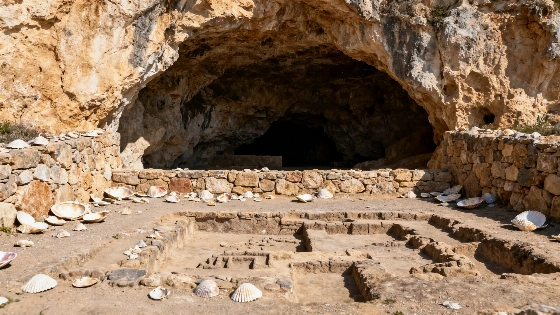
In the Los Aviones Cave in southern Spain, scientists have found new evidence that Neanderthals were far more inventive in finding food than previously thought. A team of anthropologists led by Andre Colonese from the Autonomous University of Barcelona conducted an isotopic analysis of mollusk shells found in ancient layers of the site. The results showed that Neanderthals collected and ate marine mollusks mainly during the winter months, when other food sources became less available.
This conclusion is based on the study of the isotopic composition of about fifty shells of dog whelks, limpets, and other sea creatures. Researchers determined that the chemical makeup of the shells reflects the water temperature at the time of their formation, allowing for precise identification of the harvesting season. Most finds are linked to the period from November to April—a time when the shortage of terrestrial prey is especially acute in the south of the Iberian Peninsula.
According to the authors of the study, published in the journal PNAS, this evidence suggests that Neanderthals, as early as 115,000 years ago, had a strong understanding of local ecosystems and were able to adapt their dietary habits to seasonal changes. This challenges the longstanding hypothesis that only Homo sapiens had dietary flexibility and the ability to exploit various resources.
A comparison with later Homo sapiens sites in Europe shows that the seasonal consumption of marine resources was also typical for Cro-Magnons, but it emerged around 100,000 years later than among Neanderthals. This finding changes the perception of the cultural and behavioral gap between the two ancient human species.
Rethinking the Role of Neanderthals
For a long time, Neanderthals were considered less developed than Cro-Magnons: they were attributed with a limited set of tools, a lack of speech, culture, and religion. However, recent discoveries in Spain, Croatia, and Israel show these views were overly simplistic. In Los Aviones, along with tools, researchers found some of the oldest known examples of symbolic art in Europe.
New data on Neanderthal dietary habits is prompting scientists to look for other reasons for their disappearance. Among the possible factors are small population sizes and vulnerability to climate change, traces of which remain in the DNA of ancient humans. However, the idea that Neanderthals lost out to Cro-Magnons due to an inability to adapt now seems less convincing.
The rethinking of the Neanderthals' role in European history continues. New methods of analyzing archaeological finds allow for a more precise understanding of how these ancient people lived, obtained food, and interacted with their environment. According to recent discoveries, Neanderthals were not only skilled hunters but also acutely attuned to the rhythms of nature, which helped them survive in the challenging conditions of the Pleistocene.