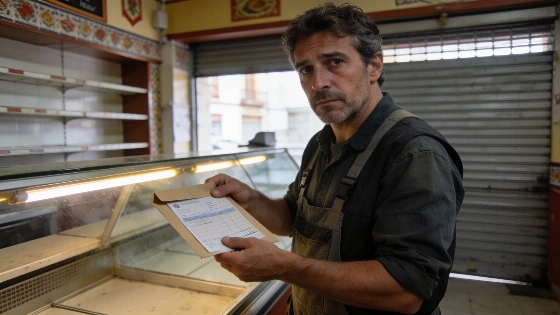
When a sole proprietor retires and shuts down their business for good, Spanish law guarantees employees a month’s salary as compensation. This right only applies if the business truly ends, not just when ownership changes.
When a business owner in Spain retires and closes the business for good, employees are entitled to a fixed payout: one month’s salary, no matter how long they have worked there. This right comes from article 49.1.g of the Estatuto de los Trabajadores. The rule is straightforward: if the business actually shuts down and isn’t handed over to someone else, the compensation must be paid. According to the Ministry of Labour, this rule is meant to protect workers from suddenly losing their jobs when small businesses close for good.
The law is strict about the details. If the business keeps running under a new owner, or if the employer is a company instead of an individual, the situation changes. Employees do not get this compensation if the business continues, even if the name on the door changes. The law only covers cases where the business itself disappears, not when it is passed on. Legal experts, quoted by El País, stress that the difference between closing and succession is key for workers’ rights.
In 2023, over 8,000 sole proprietors in Spain closed their businesses due to retirement, directly impacting thousands of workers eligible for statutory compensation.
This one-month payment is different from severance for unfair dismissal or unpaid wages. It is not based on years of service and is separate from the final settlement (finiquito), which covers unpaid salary, unused vacation, and other rights. Both the statutory month and the finiquito must be paid in full and listed separately. The Spanish Confederation of Employers (CEOE) points out that mixing up these payments is a common source of disputes when small businesses close.
Details matter. If the employer is a limited company and only a director or shareholder retires, contracts do not end automatically. What counts is who the legal employer is and whether the business really stops operating. Employees should check the termination notice, confirm who the employer is, and make sure the reason for ending the contract matches the facts. Mistakes here can mean missing out on compensation.
Things get more complicated if the business is sold or inherited and keeps running. In these cases, article 44 of the statute says the new owner must keep existing employment contracts. The law treats the business as ongoing, and workers cannot be dismissed just because ownership changes. The one-month compensation only applies if the business actually closes.
Recent data from the Spanish Social Security Administration indicate that the majority of business closures due to retirement occur in the retail and hospitality sectors, where small family-run establishments are most prevalent. These sectors have seen a steady increase in closures over the past five years, reflecting broader demographic trends and challenges facing small enterprises.
Getting this payout does not prevent workers from claiming unemployment benefits. The Spanish employment service (SEPE) recognizes termination due to the employer’s retirement, death, or incapacity as a valid reason for unemployment, as long as the worker meets the usual requirements. If the employer does not provide the right paperwork, SEPE allows workers to submit a declaration of missing documents so the agency can check the facts.
There are extra rules when many employees are affected. A recent European Court of Justice ruling (C-196/23, July 2024) clarified that mass layoffs caused by an employer’s retirement cannot skip collective dismissal procedures if they cross certain thresholds. In larger businesses, this means formal consultation and extra protections may be required, not just a single month’s pay.
For workers facing the closure of a small business after the owner retires, the steps are clear: make sure the business is really closing, check that the compensation is paid separately from the finiquito, and confirm that all paperwork sent to SEPE matches the facts. Any mismatch between reality and the documents can affect the legal outcome.
Spanish labor law is unusually clear on this point: when a sole proprietor retires and the business closes for good, employees are owed a month’s pay. But the system depends on the details. Only those who pay attention to the fine print and follow the process will get what the law promises. The outcome depends on the facts of each case and the real status of the business.