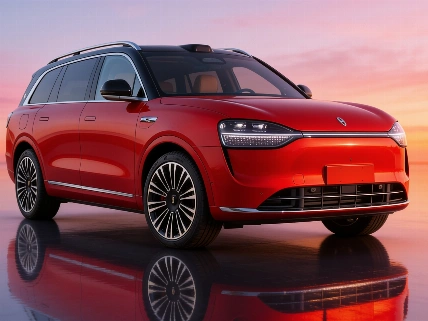

Stellantis is considering more European sites for Leapmotor production. In Spain, Zaragoza and Madrid have confirmed roles, while Vigo will continue building a van for Europe.
At the Paris Motor Show on October 12, Leapmotor International chief Danilo Annese said talks on additional European production sites were continuing. Madrid is among the locations under consideration, along with plants outside Spain. Stellantis says the partnerships could keep its facilities operating without closures by pairing Leapmotor’s electrification technology with its own industrial capacity. Local production is also meant to bring vehicles closer to European buyers and reduce reliance on imports from China.
At Figueruelas in Zaragoza, production of a new all-electric Opel SUV using Leapmotor technology is due to begin in 2028. Separately, Leapmotor announced on October 12 that its B10 electric crossover had started production at Stellantis’ Zaragoza plant. That makes the B10 the first confirmed Leapmotor model built at a European manufacturing site, for European customers.
Leapmotor also gave the B03 city car its European debut at the Paris show. The D19 flagship SUV appeared there too. Stellantis chief executive Antonio Filosa confirmed that Villaverde in Madrid will assemble models linked to the Chinese firm. In May 2026, Stellantis announced expanded cooperation covering two Leapmotor models to be produced in Spain, in addition to the Opel SUV. Vigo will keep making the K9 van for Europe. Production of the same model in Turkey is planned from 2027 for other markets.
The Stellantis-controlled international joint venture with Leapmotor was established in 2024. Stellantis holds 51% and Leapmotor 49%. Stellantis also plans to transfer a 49% stake in the Villaverde facility to the Spanish subsidiary of Leapmotor International, while retaining 51%. The arrangement leaves Stellantis with a majority stake and brings Leapmotor technology into its factories.
Chinese manufacturers are making a wider push into Europe. AVATR, for example, has outlined a separate premium-market launch in Spain for 2027, according to an earlier report.
Filosa urged the EU to ease its CO2 emissions rules, particularly for commercial vehicles, and approve the European Acceleration Act. The proposed framework is intended to favour vehicles assembled locally with components supplied by European companies. It has not been presented as an enacted measure. On October 12, Annese described a possible EU-China agreement to limit imports of hybrid vehicles as an alternative to tariffs. The proposal remains under discussion.
Stellantis estimated that consolidated deliveries reached about 1.3 million vehicles in the third quarter of 2026, down 1% year on year. The company reported the estimate on October 13. Higher battery-electric vehicle deliveries in Enlarged Europe helped offset lower volumes in North America, where summer production stoppages had been planned. Deliveries also fell in the Middle East and Africa, mainly because of a downturn in Turkey.
Europe added about 54,000 deliveries, a 10% increase. Around 26,000 came from Stellantis brands using the Smart Car platform. Those included the Citroën C3 and C3 Aircross. Opel/Vauxhall Frontera also used the platform, as did Fiat Grande Panda. The new Fiat 500 Hybrid added about 6,000 units, while the new Jeep Compass added about 5,000. Light commercial vehicle deliveries rose by roughly 7,000, led by battery-electric versions.
Those gains were partly offset by a combined decline of about 28,000 deliveries across several models. The Opel Corsa and Opel Mokka were among them, along with the Citroën C4. Alfa Romeo Junior and Peugeot 2008 deliveries also fell. Leapmotor deliveries in Europe rose by about 34,000 to 44,000, supported by launches of the B10 and B03X. Stellantis said its consolidated delivery figures for the quarter were estimates.