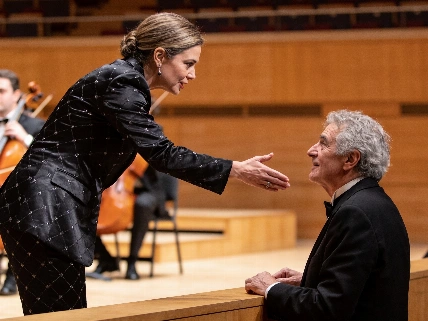
Almudena Lastra has taken legal action after not being renewed as Madrid’s chief prosecutor. The Supreme Court will now review the appointment of Isabel Martín. The case highlights ongoing divisions within Spain’s prosecution service.
The Supreme Court is set to review the contested appointment of Isabel Martín as Madrid’s chief prosecutor, following a legal challenge from Almudena Lastra, who previously held the post for five years. Lastra’s appeal, filed just before the legal deadline, targets the Royal Decree that formalized Martín’s selection. According to legal sources cited by EL PAÍS, Lastra’s legal team will submit a full argument once the administrative file is released, expected after the summer.
The dispute has reignited tensions within Spain’s prosecution service. Lastra’s removal in April by the fiscal general del Estado, Teresa Peramato, was seen by some colleagues as retaliation for Lastra’s testimony in the high-profile trial against former fiscal general Álvaro García Ortiz. Her statements in court were instrumental in supporting the accusation of unauthorized disclosure of secrets, a case that has already exposed deep rifts among prosecutors.
Lastra and Martín were the only candidates for the Madrid post. Martín, previously part of the Secretaría Técnica—a trusted unit within the fiscal general’s office—was widely expected to be favored, especially given her close professional ties to Peramato and previous fiscal generals. Many Madrid prosecutors interpreted Lastra’s non-renewal as a direct consequence of her stance during the García Ortiz proceedings.
During the trial, Lastra described a phone conversation with García Ortiz on the day a sensitive email was leaked regarding the case involving Isabel Díaz Ayuso’s partner. She recalled confronting García Ortiz about the leak, only to be told it was not important at that moment. The court’s conviction referenced Lastra’s account, noting her loyalty in alerting her superior to the situation.
However, other prosecutors criticized Lastra for not answering repeated calls from García Ortiz that same day, as the prosecution service attempted to issue a press release to counter misinformation allegedly spread by Ayuso’s chief of staff. Diego Villafañe, García Ortiz’s former right-hand man, testified that Lastra harbored animosity toward the leadership team at the time.
Lastra’s career has included membership in the Unión Progresista de Fiscales (UPF), alongside García Ortiz and Villafañe, and a period working under Dolores Delgado. Tensions reportedly arose during Delgado’s tenure, leading to Lastra’s move to the Madrid post. One senior prosecutor described the ongoing disputes as internal power struggles rather than ideological conflicts.
At the April 30 Consejo Fiscal, Lastra secured a majority of votes from the conservative Asociación de Fiscales and the Asociación Profesional e Independiente de Fiscales. However, these votes are not binding; the fiscal general retains full discretion over senior appointments. Peramato defended Martín’s selection, citing her technical expertise and leadership experience, including her previous role as Melilla’s chief prosecutor.
Peramato later addressed the Justice Commission, emphasizing the need to heal divisions within the prosecution service. Meanwhile, Lastra, who has repeatedly sought promotion to the highest prosecutorial rank without success, returned to a standard prosecutorial role under Martín’s leadership. Her farewell event at the Centro Riojano de Madrid drew prominent figures from the judiciary, and the ceremony for Martín’s swearing-in was marked by pointed references to the duty of truthfulness in testimony.
The Supreme Court has previously intervened in high-profile appointments across Spanish institutions. Notably, it overturned the promotion of Dolores Delgado to the top military prosecution post, citing lack of relevant experience and a finding of “abuse of power” by García Ortiz. The court also annulled Delgado’s later appointment as fiscal de Sala de Derechos Humanos y Memoria Democrática due to concerns over potential conflicts of interest, though the decision had limited practical effect after a subsequent review.
These legal battles reflect broader debates over merit, discretion, and transparency in Spain’s public appointments. The Constitutional Court has recently affirmed that while merit and seniority are important, the prosecution service retains a degree of discretion in appointments, provided basic requirements are met. This evolving legal context gives Lastra’s challenge added significance, as it will test the Supreme Court’s approach following the Constitutional Court’s latest guidance.
Internal disputes over appointments are not unique to the prosecution service. Similar controversies have arisen in other branches of government, such as the Ministry of the Interior and the Council of State. The ongoing scrutiny of public sector promotions and removals has become a recurring theme in Spanish politics, as seen in other recent cases involving senior officials. For example, the issue of trust and accountability among top public servants was also highlighted when María Jesús Montero expressed regret over her confidence in Vicente Fernández during the Leire case investigation, as reported in this related coverage.
As the Supreme Court prepares to examine Lastra’s appeal, the outcome could influence future appointments and the balance of discretion and transparency in Spain’s justice system. The case underscores the persistent challenges facing the country’s institutions as they navigate internal divisions and public scrutiny over key leadership roles.