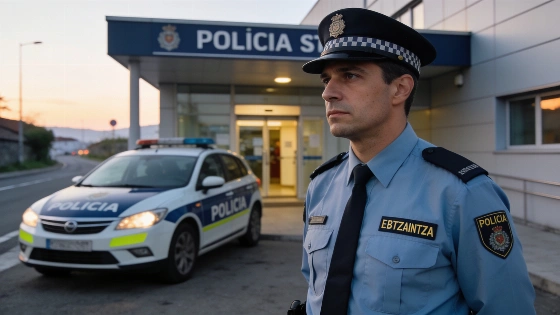
The man suspected of killing a 31-year-old taxi driver in Azpeitia turned himself in to police in Ondarroa, ending a days-long search that drew intense attention across the Basque region. The 43-year-old suspect, previously known to police for drug offenses, arrived at the Ertzaintza station at 5:30 a.m. and was detained on suspicion of homicide with a firearm.
The shooting happened Tuesday evening on Avenida Artzubia. Witnesses said the attacker first rammed his car into the victim's taxi, then fired several shots at close range. The taxi driver died at the scene. News of the killing stunned the local community and prompted a swift police response.
Within hours, police found the suspect's getaway car elsewhere in Azpeitia. They seized both his car and the victim's taxi and sent them to the forensic unit for examination. The Basque Department of Security said the vehicles are basic to the investigation as officers work to establish what happened and gather evidence.
Over the following days, police searched several locations in Azpeitia and nearby towns. They examined a workshop in the Landeta neighborhood and premises on Pablo VI street, and also searched a residence linked to the suspect. Despite the effort, the man remained at large until he surrendered in Ondarroa.
The suspect has been arrested three times previously for drug trafficking. With his surrender, attention now turns to the judicial process as investigators prepare the case for court. The Ertzaintza says the required legal steps are underway before the suspect appears before a judge.
The case has drawn attention to the risks taxi drivers face and the challenges of policing violent crime in smaller towns. The swift deployment of forensic teams and the scale of the search show how seriously Basque authorities treat such incidents. Similar investigations in other parts of Spain, including one reported earlier, point to the continued need for coordinated law enforcement.
The suspect's arrest ended the immediate threat, but broader concerns remain. Shootings like this are rare in the Basque Country, yet when they happen, they expose gaps in local security and the need for a fast police response. The Ertzaintza's handling of this case shows its operational capacity alongside the persistent challenge of preventing targeted violence. The investigation's findings may shape future policing strategies and public perceptions of safety in the region.