

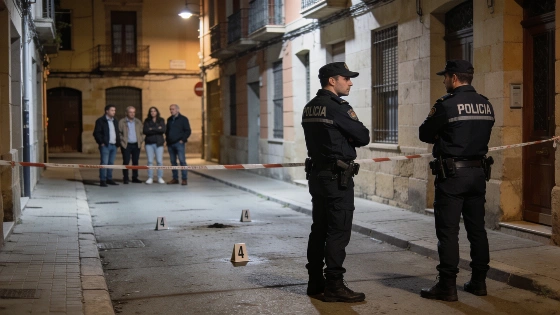
A 15-year-old, recently freed from a juvenile center, is again in custody after a deadly stabbing in Manresa. The incident has reignited debate over youth crime and public safety in Catalonia.
Just weeks after leaving a juvenile detention center, 15-year-old Pere O. was back in police custody, this time accused of involvement in the fatal stabbing of Carles Vilajosana during Manresa’s festival. The killing happened as the city celebrated its annual correfoc and has renewed scrutiny of Catalonia’s handling of repeat juvenile offenders.
Vilajosana, a 45-year-old father active in local civic life, was stabbed in the chest after trying to break up a street fight. Police say the confrontation began earlier that evening when Vilajosana stepped in to stop a fight involving Pere O. and another minor, Otman A., aged 16. Later, as Vilajosana and his friends headed home, they crossed paths with the same group. Witnesses told investigators that Pere O. threw a traffic cone at them, escalating the conflict. Moments later, Otman A. allegedly delivered the fatal knife wound.
According to the Catalan Ministry of the Interior, both minors arrested in connection with the Manresa killing were born in Catalonia and were not unaccompanied foreign minors or residents of juvenile centers.
Both suspects, described by police as regulars in a squatted building and known for prior offenses, were quickly identified thanks to detailed witness accounts. Pere O. already had a long record for his age: three arrests for violent robbery, attempted homicide, and vehicle theft, as well as an attack on a local bar worker. Otman A. is also linked to motorcycle thefts and a violent phone robbery. Police say both teenagers are active in criminal circles in Manresa.
The earlier attack on Jordi, a sandwich bar employee, shows the risks posed by these repeat offenders. Jordi remembers being stabbed in the arm without warning while closing up late at night. The attacker, later identified as Pere O., used a screwdriver, driving it four centimeters deep. "If it had been a bit to the right, I might not be here," Jordi said, still waiting for the legal process to finish. The incident left him uneasy, especially after learning Pere O. was arrested just 150 meters from his workplace.
For many in Manresa, the case has become a symbol of frustration with what they see as a revolving door in the juvenile justice system. The fact that Pere O. was back on the street so soon after a violent offense—and then allegedly involved in a deadly altercation—has fueled calls for reform. As one local put it, "They come in one door and out the other."
Local media report that emergency calls were received around 5:00–5:10 a.m., and the fatal altercation took place on carrer Sant Jaume in Manresa. The police investigation remains open, with authorities examining whether other individuals were involved in the incident.
This is not an isolated case. Violent incidents involving young offenders have made headlines across Spain, including a recent case in Valencia where a man was fatally stabbed on a bar terrace, as reported earlier. The pattern raises questions about the effectiveness of current interventions and whether authorities can protect the public from repeat violence.
Spain’s juvenile justice system is designed to prioritize rehabilitation over punishment, aiming to reintegrate young offenders into society. But when minors with a history of violent crime are released only to reoffend, the system’s limits become clear. The Manresa case exposes a gap between policy and public safety, and highlights the need for a stronger response to persistent youth crime. Without meaningful change, communities like Manresa will continue to face the consequences of a system that too often fails to break the cycle of violence.



