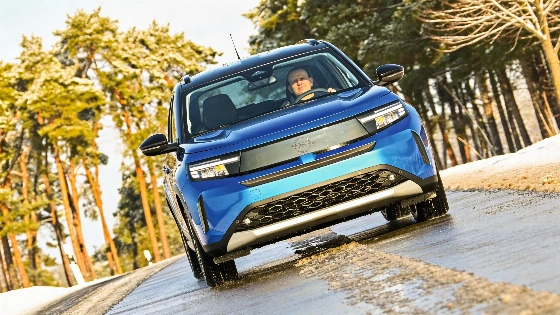
A new ranking from the French platform La Chaîne EV puts the Hyundai Ioniq 28 at the top of a list of 50 electric cars assessed for real-world efficiency and reliability. It draws on standardized highway tests and owner feedback, offering a view beyond manufacturer claims.
La Chaîne EV tested each model under identical conditions, measuring energy consumption in kilowatt-hours per 100 kilometers and assessing the consistency and speed of rapid-charging systems. Its owner survey collected 3,055 responses and recorded an average satisfaction score of 9.08 out of 10. The survey also found that 85.5% of vehicles had never experienced a breakdown that left them immobilized. These measures are distinct: satisfaction reflects owners’ overall assessments, while immobilizing breakdowns capture a specific kind of failure.
The survey also reported satisfaction scores of 9.53 out of 10 for both Tesla and BMW, but their response counts differed substantially: 1,090 for Tesla and 70 for BMW. Brands needed at least 30 responses to qualify for inclusion. That threshold helps explain why owner-survey rankings are best read as consumer comparisons, not as a definitive failure-rate league table. The survey’s reported battery-health findings, combined with the ranking’s assessment of vehicles after tens of thousands of kilometers, put long-term capacity among the factors owners consider when evaluating an EV.
The Hyundai Ioniq 28 leads with average consumption of 10.1 kWh/100 km. This is the earlier version with a 28-kWh battery, distinct from the later Ioniq Electric, which has an approximately 38-kWh pack. Its efficiency helps explain why owners have compared its usable range with that of electric cars carrying larger batteries. The Tesla Model 3 follows, with the BMW i4 eDrive in third place. Fourth is the Hyundai Ioniq 6 RWD Executive, while the Tesla Model 3 Long Range rounds out the top five, reflecting the strong presence of Asian and American brands in the ranking.
The Volkswagen ID 7 takes sixth place, just ahead of the BMW iX 50 SUV. The Kia EV9 GT-Line with 21-inch wheels is eighth, followed by the Kia EV6 RWD GT-Line, with the Renault Scenic e-Tech in tenth. The results highlight how both sedans and larger family vehicles performed in real-world conditions. Consumption figures are most useful when read in light of test conditions. Speed and weather can affect energy use, as can wheel and tire choices and the battery’s state of charge. Those factors also influence charging performance.
The Skoda Enyaq Sportline 80 ranks eleventh, ahead of the Cupra Born VZ. The Hyundai Ioniq 6 appears again in thirteenth place, while the Hyundai Kona ranks sixteenth, just ahead of the Xpeng G9 from China. The MG 4 is eighteenth, followed by the Genesis GV60 Sport and the Tesla Model Y, which closes out the top twenty. Owner-reported breakdown figures offer another perspective: the survey recorded 0.11 immobilizing breakdowns per MG vehicle and 0.15 per Nissan vehicle. Volvo recorded 0.03 across 32 responses. These figures reflect reports from participating owners, not failure rates for every vehicle on the road.
Further down the list, the Peugeot 308 ranks thirty-first, followed by the Ford Mustang Mach-e Standard Range AWD in thirty-second place. The Smart #1 Brabus takes thirty-fourth, just ahead of another Hyundai Ioniq. MG's lineup includes the MG 5 in thirty-fifth place and the MG 5 Luxury with a roof tent in thirty-second. The BMW i3s (120 Ah) appears at forty-first, followed by the Volkswagen e-Golf (35.68 kWh) and the Seat Mii with 16-inch wheels. The original Hyundai Ioniq 28 returns at forty-fourth, while the Abarth 500e Scorpiossima and Mini Cooper SE take the next spots. The Mercedes-Benz CLA 250 ranks forty-ninth, and the Volkswagen ID 7 closes the list at fiftieth.
The ranking offers a snapshot of the electric car market in 2026, where efficiency and mechanical reliability are increasingly impressive to buyers. The measures describe different parts of ownership: energy consumption affects running costs and range, while an immobilizing breakdown differs from a routine repair. Battery-capacity changes and safety recalls are separate considerations. Battery warranties commonly extend to about eight years or 160,000 kilometers, while electric motors generally require fewer scheduled service interventions than combustion engines. Warranty terms, but, do not directly measure how much battery capacity a vehicle retains. A recent analysis of the Mazda MX-5's evolution and the shift from gasoline to electric can be found in this feature on the future of the Miata.
The European EV market has grown rapidly, with infrastructure and battery technology improving year by year. Range anxiety remains a concern for some buyers, while independent testing such as La Chaîne EV's offers understanding into how models perform. Buyers weighing the results can compare real-world range with charging speed. Battery longevity and the frequency of unplanned service visits offer further context, rather than treating a single score as a complete measure of reliability.