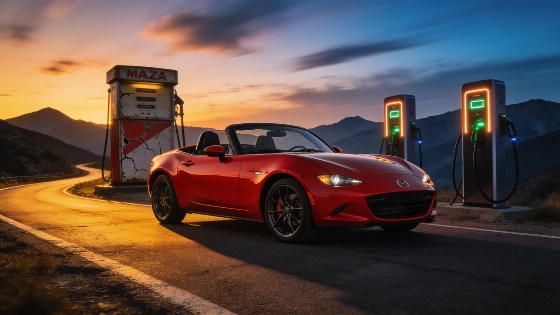
Mazda is preparing to launch the fifth-generation MX-5, and it may be the final Miata powered by a gasoline engine. As electrification reshapes the industry, the beloved roadster faces its biggest transformation yet.
When Mazda introduced the MX-5 in 1989, it set a new standard for affordable driving pleasure: light, rear-wheel drive, naturally aspirated, and always with a manual gearbox. Now, as the automotive world accelerates toward electrification, Mazda is preparing the fifth-generation MX-5—codenamed NE—and signals suggest it could be the last Miata to feature a combustion engine.
For decades, the MX-5 has stood apart by resisting the weight and complexity that have become common in modern cars. Even as rivals grew heavier and more high-tech, the Miata remained true to its roots, rarely tipping the scales above 1,000 kilograms. This purity has made it a favorite among driving enthusiasts, who value the car’s balance and simplicity over raw power or luxury features.
The Weight of Change
Electrification is now the dominant force shaping the future of the car industry. Internal combustion engines are on borrowed time, and even icons like the MX-5 are not immune. Mazda’s engineers have long prioritized keeping the Miata light and agile, but the shift to electric powertrains brings new challenges. Batteries add significant weight, and the unique character of the MX-5—its rev-happy engine and crisp manual transmission—will be difficult to replicate in an electric version.
Despite these pressures, Mazda has managed to keep the current, fourth-generation MX-5 remarkably light, even as safety and emissions regulations have forced most cars to bulk up. While some recent versions have crept just over the 1,000-kilo mark, they remain far lighter than most modern vehicles, especially electric and plug-in hybrid models that often exceed 2,000 kilos.
One Last Gasoline Miata
According to recent statements from Mazda executives, the upcoming NE generation will continue with a gasoline engine—likely for the last time. As reported by Car Expert, Vinesh Bhindi, CEO of Mazda Australia, confirmed that a new MX-5 is in development, and hinted that it could be the final model with an internal combustion engine. The launch is expected around 2028, with the current ND generation set to reach an impressive 13-year production run by then.
Industry reports suggest the NE will feature the largest and most powerful engine ever fitted to an MX-5: a 2.5-liter inline-four from Mazda’s upcoming Skyactiv-Z family. While official power figures remain under wraps, Mazda’s goal is to keep the car’s weight below 1,000 kilos—a remarkable feat if achieved. However, regulatory changes in Europe could force Mazda to end sales of the gasoline-powered MX-5 as early as 2035, due to strict CO2 reduction targets.
What Comes Next?
The transition to electric power will fundamentally change the MX-5’s character. The loss of its signature engine and manual gearbox, along with the inevitable weight gain from batteries, raises questions about whether the Miata’s unique driving experience can survive. Enthusiasts are already debating what an electric MX-5 might feel like, and whether it can deliver the same joy on the road.
For now, the NE generation offers one last chance to own a brand-new, gasoline-powered Miata. As the industry moves toward electrification, the MX-5’s legacy as a pure driver’s car is more significant than ever. The coming years will test whether Mazda can reinvent its icon for a new era—or if the NE will be remembered as the final chapter of a legendary story.
For those interested in the technical side of driving, the debate between manual and automatic transmissions remains relevant, especially as the industry evolves. A recent analysis of the most expensive gearbox failures highlights the real-world costs and challenges drivers face, which you can explore in this detailed look at transmission breakdowns.
Context: The MX-5 has been the world’s best-selling roadster for decades, with over a million units sold. Mazda’s commitment to lightweight engineering has made the Miata a benchmark for affordable sports cars. As electrification becomes the industry standard, even iconic models like the MX-5 must adapt or disappear. The NE generation’s arrival marks a pivotal moment—not just for Mazda, but for car enthusiasts everywhere.