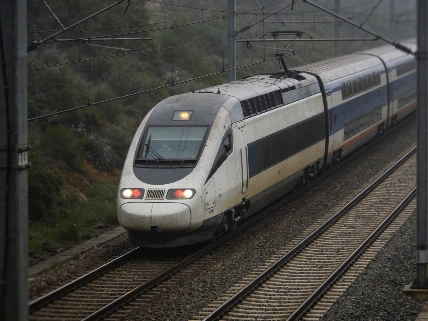
The Urda crash killed 69 people on the Madrid-Seville high-speed line on 28 October. The collision involved a Renfe high-speed train and a stationary Iryo train. Rail unions say maintenance commitments agreed after earlier accidents have moved slowly, and they have announced further stoppages for November.
Semaf, the train drivers’ union, has called a 24-hour strike for 10 November, followed by partial stoppages on 12 November from 6:20 to 9:20 a.m., 2:20 to 5:20 p.m. and 9:20 to 11:20 p.m. Five unions on Adif’s works committee, CC OO, UGT, SGT, Sindicato Ferroviario (SF) and Sindicato de Circulación Ferroviario (CFT), have announced a stoppage for 17 November. The unions have also planned a demonstration outside Spain’s Congress on 16 November.
The dispute predates the Urda disaster. Semaf had called a 24-hour national railway strike for 29 October before the crash, with safety improvements among its demands. Adif had been negotiating a new collective agreement, while drivers’ representatives say existing commitments to reinforce maintenance on conventional and high-speed lines are being implemented too slowly. The agreement signed on 9 February by Semaf, the Transport Ministry, Renfe and Adif set up working groups to develop new safety rules and operating procedures. It followed the Adamuz crash, which killed 46 people in January, and the Gelida accident in Catalonia, where a train driver died.
The Government says staffing has already increased at Renfe and Adif. Adif’s board has now approved a separate funding framework between Adif and the state, worth €20bn over five years from 2026 to 2030. It provides for increased investment in maintenance of both conventional and high-speed rail networks. The funding is a multi-year public envelope, rather than a single-year maintenance allocation.
Staffing remains a central union demand. CSIF has called for more employees and better working conditions, arguing that Adif’s recruitment offer is inadequate to curb job insecurity and protect safety. The recruitment round is due to begin next week, with 23,600 candidates for 1,531 posts. The union also proposes specialised training and new rules on health and rest.
According to Euronews’ reporting on Transport Minister Óscar Puente’s statements to MPs, the LZB automatic train-control system on the affected high-speed service had failed, yet an Adif control centre allowed the train to continue. LZB is a continuous automatic protection system used on parts of Spain’s high-speed network. The unions’ November campaign also includes planned partial stoppages by Ouigo drivers on 6 and 9 November.
The 69 deaths have prompted government compensation measures, covered in a report on victim support.
Separately, Civil Guard officers from the Unidad Central Operativa (UCO) visited Adif on Thursday 5 November to request information for a newly opened, secret part of the National Court’s investigation into the Koldo case. The inquiry concerns alleged kickbacks in public works contracts during José Luis Ábalos’s time as transport minister. Adif sources said staff provided the requested documents and that officers carried out no search.