For a family whose relative died, the government package provides €144,242.92: €72,121.46 as a non-repayable grant and the same amount as an advance on civil-liability compensation. Compulsory passenger insurance may raise the total to €216,364.38. Claims for that insurance must go to the insurers of the relevant rail company.
The package follows the collision on 28 October 2026, when a Renfe AVE train rear-ended a stationary Iryo train near Urda, Toledo, on the Madrid to Seville high-speed line. The impact occurred at about 8:53 a.m. near kilometre 118, with both trains travelling south from Madrid. Later reports put the death toll at at least 69, with more than 100 people injured.
The Government of Spain says people can request the direct grants and advances together through one procedure. The non-repayable grant is exempt from personal income tax and remains compatible with other assistance and compensation.
For a death, each measure is worth €72,121.46 per person who died. Where several indirect victims qualify, the amount is divided according to the established order of priority. Payments for bodily injuries range from €2,404.04 to €84,141.70, depending on severity.
The advance is reconciled against the eventual civil-liability award. If that award is lower, recipients do not have to return the difference. If it is higher, they receive the amount above the advance.
Applications will be accepted for three months from publication of a resolution by the Secretary of State for Transport and Sustainable Mobility setting out the procedure. The period may be extended, either on the authorities’ initiative or at an applicant’s request, where justified reasons exist.
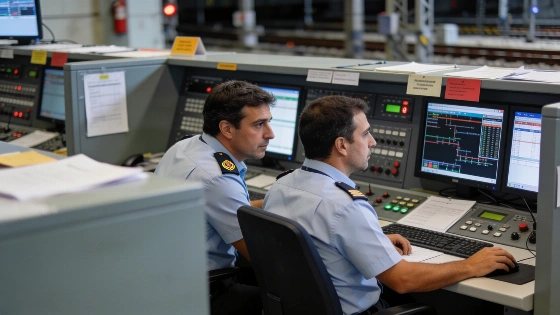
Spain’s Railway Accident Investigation Commission (CIAF) is conducting the technical investigation. A separate judicial inquiry is being handled by Court of First Instance and Preliminary Investigation No. 2 in Orgaz, Toledo. Investigators are examining the LZB train-control system, which reportedly went offline around 8:30 a.m. after a computer communication failure, and the response of Adif’s control centre. The cause and responsibility had not been definitively established.
Applicants can use the electronic headquarters of the Ministry of Transport and Sustainable Mobility. In-person help is available through comprehensive assistance offices at government delegations, sub-delegations and island directorates in the autonomous communities where affected people live. Applications can also be filed at official registries under Law 39/2015.
Social Security measures apply automatically and retrospectively, including where a work absence or pension has already ended or been recognised. Accident-related temporary incapacity leave counts as a work accident for benefit purposes: payment starts on the first day rather than the fourth, at 75% of the regulatory base instead of 60% for common contingencies.
Permanent incapacity, death and survivors’ pensions, along with the benefit for partial permanent incapacity, are calculated as work-accident benefits when that is more favourable. For people covered by the State Civil Service Pension Scheme, extraordinary-pension rules may provide a higher payment for qualifying incapacity, widowhood, orphanhood or parents’ pensions.
Those affected can contact Social Security on 900 10 35 35 or at info.accidente@seg-social.es for priority assistance. The ordinary channels are 91 542 11 76, 901 166 565 and prestaciones.seg-social.es.
The offices can help with applications. If someone cannot travel, staff from government sub-delegations can provide assistance at home anywhere in Spain through the Ministry of Territorial Policy and Democratic Memory’s La Administración cerca de ti service. Workers who could not attend their workplace or arrive on time because of the accident cannot be penalised by their employers. Rail companies must provide evidence of service disruptions.
The package also includes a price-limitation mechanism for services affected by the interruption of the Madrid-Andalusia rail line. The crash has also brought scrutiny of the transport minister’s position, covered in an earlier report on ministerial pressure.