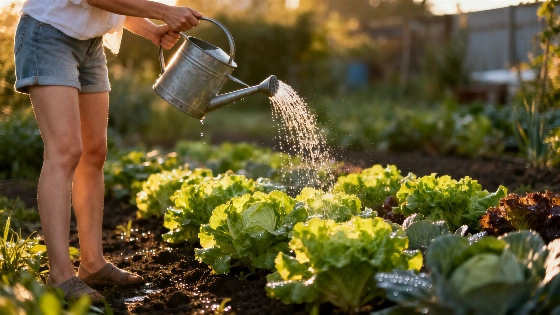
As Spain faces its first major heatwave of the summer, AEMET has issued high-temperature alerts across parts of the country. That makes knowing when and how to water plants more impressive. Timing affects gardens and other outdoor spaces, but needs vary with local weather and each plant’s exposure, along with soil moisture and plant type.
Early morning, before the sun gains strength, is generally the most effective time to water in hot weather. Cooler conditions reduce evaporation, giving water more time to reach the root zone before daytime temperatures rise. The Royal Horticultural Society recommends considering the timing and method, and directing water to the soil around the roots instead of routinely wetting foliage.
Morning vs. Evening Watering
Early morning is generally preferable, while evening can be an alternative when morning watering is not possible. But if leaves stay wet overnight, prolonged moisture may encourage fungal problems. Apply water to the soil at the plant’s base, not over leaves and stems, so it can reach the roots.
Common Mistakes During Heatwaves
One common mistake is watering lightly and often without checking whether the root zone needs more moisture. Repeated shallow watering can leave much of the soil dry and keep roots near the surface. For many established plants, watering thoroughly when needed is more useful than repeated small applications, though the right frequency depends on the species and local conditions, including soil type. Check the soil a few centimeters below the surface: if it is dry, water; if it is still moist, wait and check again.
Extra Care for Pots and Containers
Plants in containers, including pots and hanging baskets, often need more frequent checks than plants in the ground. Containers hold less soil, and those exposed to direct sun or wind can dry quickly. The University of Minnesota recommends watering container plants as early as possible in the morning and applying water directly to the soil, for example through drip irrigation or careful hand watering.
Mulch, such as pine bark, dry leaves or compost, can help reduce moisture loss and buffer soil temperature. During the hottest part of the day, grouping pots in partial shade can also limit heat exposure. Check container soil regularly instead of relying on a fixed watering schedule.
Efficient Watering for a Hotter Climate
During a heatwave, the aim is to match watering to what the plant and soil need, not simply to water more. Early morning is generally preferable; midday watering can lose more water to evaporation, particularly in exposed conditions. AEMET’s Meteoalerta system provides updated adverse-weather warnings for up to 72 hours at local and regional levels, helping gardeners account for conditions where they live instead of assuming heat is uniform across Spain.
AEMET also publishes forecasts and station observations, including hourly readings and daily extremes, distinguishing expected conditions from temperatures already recorded. For gardeners, the practical indicators are the plant’s exposure and the moisture around its roots. As Spain experiences hotter, drier summers, careful watering informed by local conditions can help protect plants while avoiding unnecessary applications.