Álvaro, 39, is the last permanent inhabitant of a remote Asturian village unreachable by car. He maintains his family’s historic home, battles encroaching wilderness, and faces the challenge of rural depopulation alone. His story highlights the struggle to keep Spain’s rural heritage from disappearing.
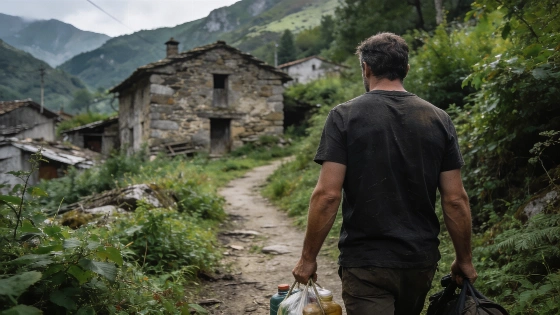
Álvaro, aged 39, lives alone in a secluded village in Asturias that cannot be reached by road. Six years ago, he returned for work and ended up settling in the only inhabited house—a home his late father restored. Today, Álvaro is the sole guardian of a place where family memories stretch back centuries, and where the threat of abandonment is constant.
To reach his home, Álvaro parks his car at the top of a steep path and continues on foot, just as he did as a child with his father. The lack of road access complicates every repair and makes transporting supplies a challenge. Yet, the house stands as a living archive: a wooden beam carved with the date 1794, a diploma from the University of Oviedo dated 1906, and old newspapers reporting the death of Thomas Edison. Each object preserves a fragment of family and local history.
The School and the Lagar
Among the village’s most meaningful buildings is the former school, built by Álvaro’s great-grandfather for a teacher he loved. Though classes ended decades ago, the stone structure still bears traces of its original purpose. Elderly visitors sometimes recall their childhood lessons there. The main house features a covered balcony, stables beneath the bedrooms, a bread oven, and a wine press—remnants of a way of life that faded as families left in the late 20th century. Today, ownership of the village is divided among several heirs, many of whom live far away and rarely visit.
Fighting the Wilderness
Álvaro’s responsibilities go far beyond maintaining his own home. He clears the overgrown path, ensures the water supply, and tries to keep the village accessible for occasional visitors. The old gardens and meadows are no longer cultivated, and each season the forest creeps closer. Without regular agricultural activity, the workload grows, and the risk of wildfire increases. Álvaro worries that fire could one day destroy what remains, especially as the shrinking population means fewer hands to keep the land clear. The regional government acknowledges that the decline of farming has erased the natural firebreaks that once protected rural settlements.
Asturias and Rural Decline
Álvaro’s situation is not unique in Asturias. According to official data, 23 municipalities in the region are at risk of depopulation, and another 30 face demographic crisis. These areas are marked by low population density, aging residents, and declining birth rates. While Spain’s national strategy has led to some rural areas gaining new residents in recent years, many villages continue to lose people and services. The future of places like Álvaro’s village depends on the willingness of individuals to stay—and on whether support can be found to maintain basic infrastructure.
For Álvaro, the decision to remain is both personal and practical. “The future is the village,” he says, summing up his commitment to a place where history, family, and landscape are inseparable. His daily efforts may not reverse the tide of rural decline, but they keep one corner of Asturias alive for another season.