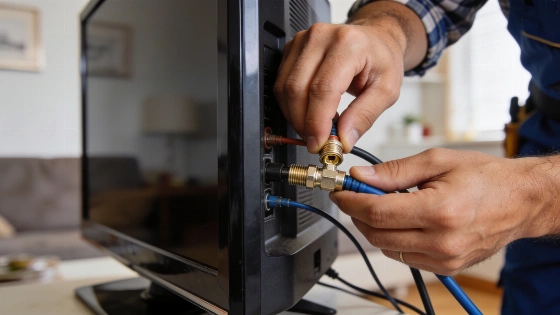
Frequent interruptions in TDT signal are not always caused by the antenna. Electrician Sergio Llorente highlights a common cable connection issue and explains how a small change can restore stable TV reception at home.
When television images freeze or disappear, most people blame the antenna or suspect a problem with the building’s installation. But according to electrician Sergio Llorente, the real culprit is often much closer: the connectors joining your coaxial cables.
Llorente, who shares practical advice on social media, points to the traditional male and female connectors as a frequent source of signal loss in TDT (Digital Terrestrial Television) setups. These connectors, widely used in Spanish homes, can become loose or poorly fitted over time, creating a weak link that disrupts reception.
Why Connectors Matter
Even a small fault at the cable junction can cause the TV picture to break up, display pixelated blocks, or vanish altogether. While it’s tempting to adjust the antenna or call a technician, Llorente suggests first checking the cable connections behind your television and along the signal path. A poorly made or unstable connection can introduce enough interference to make the signal unreliable.
This issue isn’t limited to televisions. Similar connection problems can affect other household devices, such as WiFi routers, where a weak link in the cable can degrade performance.
How to Fix the Weak Point
Llorente recommends replacing the standard male and female connectors with F-type connectors, which are designed for a more secure and stable fit. The process starts by removing the old connectors, provided there is enough cable length to work with. The coaxial cable must then be carefully prepared: the outer sheath is stripped back to expose the metallic mesh, which is folded back, and a portion of the inner insulation is removed to reveal the central conductor.
The F-type connector is then screwed onto the prepared cable end, ensuring the central wire protrudes slightly for proper contact. Once both cable ends are fitted with F connectors, they are joined using a barrel-type coupler, which is tightened with wrenches or pliers for a firm, movement-free connection. Llorente also advises covering the joint with heat-shrink tubing for added protection.
When This Solution Makes Sense
Switching to F connectors won’t solve every TDT reception problem. Issues like a misaligned antenna or damaged installation can also cause signal loss. However, if the rest of the system is working and the problem seems isolated to a specific connection, this simple upgrade can make a noticeable difference.
Spain’s official TDT guide also notes that proper cable connections are essential for reliable digital TV reception. Checking and improving these small details can save time and money by avoiding unnecessary antenna replacements or service calls.
For many households, a stable television signal depends on more than just the antenna on the roof. Sometimes, the weakest link is hidden in plain sight—right behind the TV.