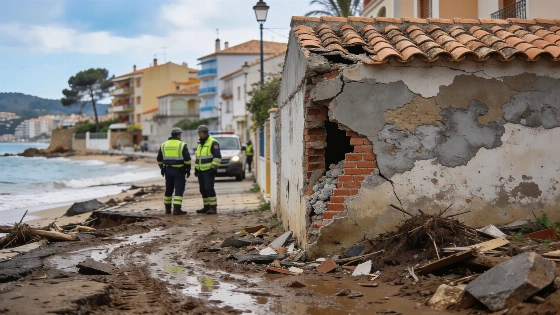
Severe overnight rains in Costa Daurada left 11 injured and caused major flooding. Local mayors demand urgent structural changes to prevent future disasters. Authorities are assessing damage and reviewing emergency protocols.
Unprecedented torrential rains struck Costa Daurada overnight, resulting in 11 people injured and widespread material damage across the region. Nine of the injured remain hospitalized, with the most serious case involving a minor who was struck by a collapsing wall at the port of Roda de Berà. The intensity and duration of the rainfall caught residents and authorities off guard, with unofficial measurements in Roda de Berà reaching 276 liters per square meter.
As affected residents and insurance companies begin to assess the scale of the destruction, local leaders are demanding urgent action. The mayors of Roda de Berà and El Vendrell have called for structural solutions to prevent the railway line from acting as a barrier during heavy rains. Both officials agree that the severity of the event was difficult to predict and do not criticize the regional government for not issuing an EsAlert warning. President Salvador Illa has stated that he is closely monitoring the situation, maintaining contact with local authorities, and urging maximum caution as further rain alerts remain in effect for Terres de l’Ebre and other parts of Catalonia.
El Vendrell’s mayor, Kenneth Martínez, described the railway and the N-340 highway—closed for hours during the storm—as obstacles that worsen flooding. He advocates for bold decisions, including more underpasses and improved drainage systems. Roda de Berà’s mayor, Pere Virgili, has pressed Adif to invest in making the railway line more permeable, noting that its wall acts as a dam, trapping water in coastal neighborhoods. The situation at the Arc de Berà campsite highlighted these issues, as debris blocked an evacuation tunnel and part of a retaining wall collapsed, compounding the flooding.
Both municipalities are now evaluating the condition of affected streets, counting damaged vehicles—some of which have been sealed off—and inspecting battered beaches. In Roda de Berà, floodwaters washed away sections of the Camino de Ronda and forced the closure of part of the seafront promenade. The owners of the hardest-hit campsite have declined to comment, while the mayor has indicated that further interventions may be necessary. Previous agreements with the Catalan Water Agency aim to reduce the impact of future storms, and El Vendrell is also reviewing protocols for managing streams and torrents that cross urban areas.
Emergency services responded to additional risks, including the evacuation of guests at the Maramar hotel in Coma-ruga after chlorine tablets were discovered in a flooded underground car park. By Sunday morning, the guests had been allowed to leave confinement. The scale and suddenness of the flooding in Costa Daurada echo similar extreme weather events in the region, such as those recently reported in Tarragona, where heavy rains also led to injuries and evacuations.
Flooding events like this are becoming more frequent in parts of Spain, with climate experts warning that aging infrastructure and urban development near waterways can increase the risk of severe damage. The Costa Daurada, a popular tourist destination, faces particular challenges due to its dense coastal settlements and reliance on transport links that can become bottlenecks during storms. Local authorities are now under pressure to accelerate investments in flood prevention and to adapt emergency protocols to better protect residents and visitors in the face of increasingly unpredictable weather patterns.