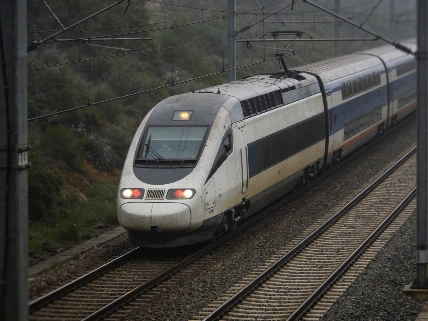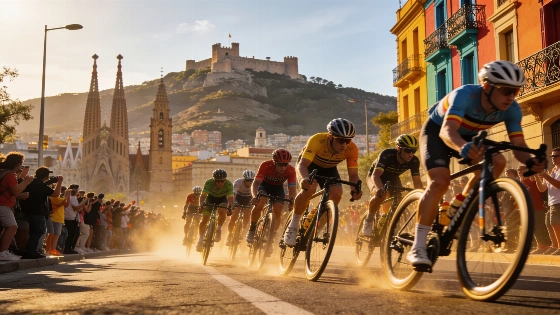
The Tour de France’s second stage covered 168.5 kilometres from Tarragona to Barcelona, finishing with a demanding climb on Montjuïc. It followed the 19.6-kilometre team time trial in Barcelona, where Visma’s victory put Jonas Vingegaard in the yellow jersey. Cyclingnews’ published route listing identifies the Tarragona-to-Barcelona road stage as the next leg of the race.
Vingegaard’s lead set up an immediate test against his rivals. Tadej Pogačar was 11 seconds behind, while Juan Ayuso trailed by 16 seconds. The Barcelona finale gave riders chances to attack on the short Catalan climbs and could shift the early general-classification picture.
The route was far from straightforward. After a flatter opening, riders crossed the Garraf region and climbed to Begues, a 6.1-kilometre ascent averaging 6.5% and classified as a second-category climb. The final Barcelona circuit included three laps, each featuring the climb towards Montjuïc Castle and the stadium. That 1.6-kilometre ascent at 9.3% was rated third category. After a technical descent, riders faced a final 700-metre ramp at 7% towards the Olympic stadium.
The repeated short climbs and technical descents demanded concentration and careful positioning on the closing laps. In a general-classification contest, even a brief loss of contact could cost time. The terrain also gave punchy climbers a chance to attack before the finish.
The stage was part of a wider route built around climbing and time-trialling. Danish cycling expert Brian Nygaard, speaking to DR Sporten, judged the course particularly favourable to Pogačar. He also named Remco Evenepoel and Paul Seixas as threats to Vingegaard. DR’s route analysis highlighted two first-week stages longer than 220 kilometres, placing the Barcelona circuit within a broader test of endurance and versatility.
The stage-day schedule listed live coverage on Teledeporte from 13:45, with La 2 joining from 16:15. RTVE Play offered a stream, with commentary from Carlos de Andrés and Pedro Delgado. Teledeporte’s social channels and RTVE.es/Deportes also planned updates, interviews and reports, including coverage of Spanish riders and teams.
The race classification lists Pogačar as the Tarragona-to-Barcelona stage winner in 4 hours, 32 minutes and 7 seconds. Vingegaard finished second, 2 minutes 38 seconds behind. Ayuso placed seventh, 2 minutes 57 seconds back, information from the results published by AS. The results show how the stage reshaped the early standings after the pre-stage contest among the leading riders.
Montjuïc has long hosted a demanding Volta a Catalunya finale. Primož Roglič won there in 2025, followed by Pogačar in 2024. Evenepoel took the victory in 2023. Their climbing ability and acceleration suit the circuit’s repeated efforts.
The stage was one chapter in a longer Tour. Visma’s opening team-time-trial win put Vingegaard in yellow, but he later crashed out on Stage 15. Pogačar went on to win five stages and the overall classification, according to Domestique Cycling’s 2026 season summary.
The stage’s significance reached beyond the immediate battle for the yellow jersey. Catalonia continues to position itself as a hub for major international sporting events, and the Tour’s arrival in Barcelona raised the region’s profile. A recent analysis of Catalonia’s sports strategy examines its ambitions and the challenges of hosting world-class competitions: Catalonia's lead to attract top-tier international sports events.
The Tour de France is the world’s most prestigious cycling race, attracting global attention and impressive economic activity for host cities. Its Spanish stages reflect Catalonia’s cycling heritage and its place in the race’s international reach. The Montjuïc circuit’s history and technical demands made it a dramatic setting for a stage that tested the leading contenders and helped shape the race’s opening narrative.