Spain faces asset freeze threat over debt from ‘green’ claims. Creditors who have won rulings against Spain in renewable energy disputes have stepped up efforts to recover debts in the US. Their actions could complicate the Spanish national team’s participation in the World Cup.
Spain faces the threat of new restrictions in the US: creditors who won lawsuits against the state over the reduction of renewable energy support have begun an active phase of debt collection on the eve of the World Cup. According to El Confidencial, the amount exceeds €2.3 billion, and legal actions affect key cities where the national team will be located.
The Blasket Renewable Investments fund and its representatives from King & Spalding have expanded the enforcement of court decisions across several US federal districts. This became possible after Judge Beryl A. Howell from the District of Columbia allowed the registration of collections nationwide. Procedures have already been launched in New York, California, Texas, Florida, Georgia, and other states where the Spanish national team may play matches or organize their activities.
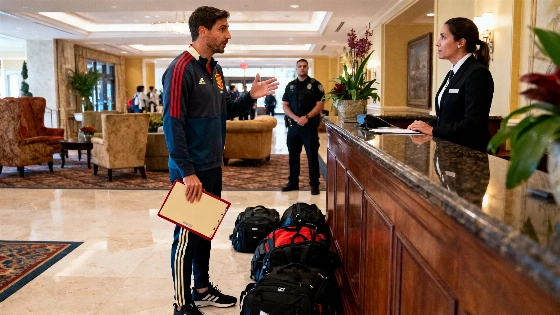
The creditors' lawyers expect that the World Cup's timing will increase pressure on Spain: any issues with payments, hotel bookings, transportation, or event organization could create reputational risks for the country. They have tools at their disposal to request information from banks, hotels, airlines, and other partners, allowing them to track and potentially block financial flows linked to the team's stay.
The Spanish government emphasizes that any asset seizures require a separate procedure in which the state can defend its interests. The Ministry for the Ecological Transition considers Blasket’s actions to be formal and primarily aimed at generating media noise. Authorities also note that the Football Federation is a private organization and its activities should not be subject to restrictions related to government debts.
The creditors’ legal campaign became possible after the United States court ruled that Spain had failed to fulfill its debt repayment obligations voluntarily. Now, enforcement rulings cover 10 states, and the coincidence with the World Cup makes the situation particularly sensitive for the country's image. Spain has already filed a petition with the US Supreme Court demanding that US courts be found to lack jurisdiction over these cases.
According to El Confidencial, Spain currently has 27 open international arbitrations regarding retroactive changes in support for renewable energy. The total amount of claims exceeds €2.3 billion, of which more than €550 million is interest and legal costs. In addition to the US, similar proceedings are underway in Belgium, the Netherlands, the United Kingdom, Australia, and Singapore.
The issue of debts from “green” lawsuits dates back to the 2010s, when Mariano Rajoy’s government repealed subsidies introduced under José Luis Rodríguez Zapatero. The current cabinet under Pedro Sánchez continues to contest payouts, fearing it could set a precedent for further claims. As El Confidencial notes, authorities claim to have already reduced the amount demanded by more than 80% compared to initial estimates.
The situation with asset freezes amid major international events is not the first time this has been used as leverage against Spanish authorities. Similar attempts to use high-profile occasions to strengthen negotiating positions have been seen in other areas, for instance, when the Pope’s visit became an argument in migration policy disputes, as detailed in a report by russpain.com.
For reference: Spain is among the EU countries with the highest number of international energy arbitrations. Rulings on these cases are often enforced through third-country courts, creating risks for state and state-linked assets abroad. In recent years, the EU has been discussing reforming investment protection mechanisms to reduce the number of such disputes.