Carles Puigdemont says a return after the amnesty law is applied would not necessarily make him opposition leader in the Catalan parliament. He wants to see for himself how Catalonia has changed since 2017.
On 8 August 2024, Carles Puigdemont appeared in central Barcelona as Salvador Illa was being invested as Catalonia’s president. Puigdemont said he had planned to enter the Parlament, but changed course after seeing the police presence around the Parc de la Ciutadella. He left in a car, seated in the back, and travelled through Badalona and the Maresme. He had been living in Belgium since leaving Spain in October 2017, after the unilateral declaration of Catalan independence.
In a TVE interview, the Junts leader said that returning would not necessarily mean taking up the role of opposition leader. He argued that a former president of the Generalitat should not oversee the current president, Salvador Illa. His return remains conditional on the amnesty law being applied. Spain’s Organic Law 1/2024 was adopted on 10 June 2024 and published in the Official State Gazette the following day. It did not settle the separate dispute over whether the amnesty covers the alleged embezzlement in Puigdemont’s case. He has asked the Supreme Court to apply the law without further delay.
He says the Catalonia he left in 2017 no longer exists.
If he returns, Puigdemont wants to experience the country as it is now and hear from younger generations. On 8 August 2024, he returned to Barcelona but did not enter the Catalan parliament and soon left the city.
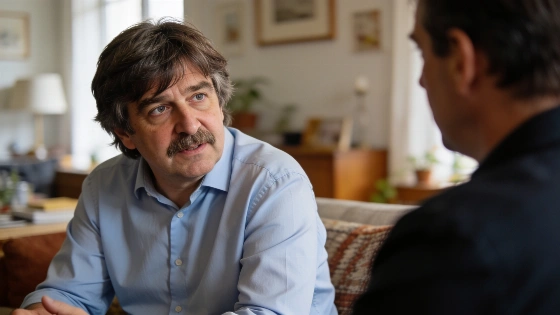
Journalist Jordi Basté recorded the interview at Puigdemont’s home in Waterloo, Belgium, for La 2 Cat de RTVE’s programme 'Pla seqüència'. Much of it focused on Puigdemont’s personal life during nine years away from Catalonia, along with his plans and recollections.
Puigdemont described the night he left in 2017, after the unilateral declaration of independence, to avoid arrest. He said he travelled by car on 29 October, the day of Sant Narcís, and spent his first night at the Hotel Chambord in Brussels. He denied being hidden in the boot. He said he sat in the back seat wearing a suit and tie.
Protecting the institution of the presidency had been his priority, he said, despite the uncertainty of leaving. He also described an attempt to find out whether he was being watched. Puigdemont asked someone to drive his Belgian car across the Spanish border and park it outside his house in Sant Julià de Ramis, Girona. He said the car was not stopped on either the outward or return journey.
On his 2024 visit to Barcelona, Puigdemont again rejected the account that he escaped in a car boot. He said he has images that would show how he travelled, but did not say when they would be released.
Before Junts became pivotal to Pedro Sánchez’s 2023 investiture, Puigdemont said a PSOE emissary visited him discreetly three times. The emissary offered an arrangement Puigdemont described as similar to the pardons. He said he would accept only an amnesty, which the visitor initially said could not be discussed. Puigdemont did not name the emissary. Separate coverage of Spain’s sovereignty debate examined a different dispute in a report on Felipe VI in Ceuta.
Donations from supporters, channelled through a Belgian organisation, pay the rent on Puigdemont’s Waterloo home, he said. His first planned stop after returning to Catalonia is the cemetery in Amer, Girona, where he intends to visit the graves of his parents, who died while he was in Belgium.
The legal questions surrounding his return have continued separately. The Constitutional Court later confirmed that the amnesty could apply to Catalan figures facing the embezzlement dispute. The Supreme Court’s revocation of the national arrest warrant did not itself close the case or decide whether the amnesty applied.
In October 2026, Spain’s Court of Auditors closed the financial case against Puigdemont and 34 others over spending linked to the independence campaign and the 1 October 2017 referendum. Prosecutors had sought to recover about €3.4 million. The court applied the amnesty in that financial proceeding, finding that the use of funds from the EU budget, or funds managed by or on behalf of the EU, had not been established. The ruling concerned the financial case and did not automatically resolve the separate criminal proceedings over alleged embezzlement.