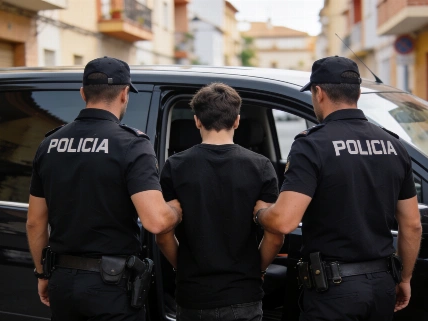
Two adults are in prison without bail over suspected links to the Barcelona looting, while a 17-year-old has been placed in a closed juvenile centre. The six arrests target suspected organisers and promoters of the Blocus calls, but police say there is no established connection between the suspects. They are part of a separate investigation from the arrests made during the disturbances themselves.
The Mossos d’Esquadra say the investigation has focused on messaging groups and social media activity connected to the looting on 24 October. Investigators have examined material from Telegram, WhatsApp, TikTok and Signal. They say some suspects used QR codes on TikTok posters to direct people to WhatsApp groups. Reuters reported that police believe Blocus channels used social media and online platforms to exploit calls linked to student protests as cover for looting and violence.
Police sources say there is no conclusive evidence of external interference behind Blocus, although they have not ruled it out. The Mossos’ Information Division has been analysing large volumes of downloaded social media content. Investigators say the six people identified so far acted individually, with no proven links among them. Reuters reported that Spanish authorities had arrested six other people linked to the group by 30 October, as the investigation expanded beyond those detained at the scene.
The first arrest was a 16-year-old from Bellmunt d’Urgell in Lleida, accused of creating a Blocus Lleida group. A court ordered supervised release with therapeutic intervention and barred the teenager from entering Lleida on 31 October and 1 November. The following day, officers arrested a 17-year-old in Sant Sadurní d’Anoia, whom police suspect of organising and coordinating activity in a WhatsApp group. The Mossos said the group was allegedly used to coordinate looting and public disorder, and to incite violence against police officers. The juvenile section ordered closed detention in that case.
Also on Friday, police arrested an 18-year-old in Barcelona accused of instigating the calls to loot and administering a Blocus-related Telegram group. Police described him as an instigator and promoter of the group, and a judge ordered pre-trial detention without bail, citing indications of conspiracy to cause public disorder and suspected membership of a criminal group. An earlier report also covered the case.
A 21-year-old arrested in Cabrera d’Anoia the next day is accused of coordinating vandalism in Barcelona. Investigators say he administered a communications group accessed through a QR code on TikTok posters and actively drove its activity. They also place him in Barcelona during the disturbances. The Mossos described his alleged role as coordinating acts of vandalism recorded in Barcelona on 24 October. A judge ordered his remand in connection with public disorder and suspected membership of a criminal organisation.
Two girls aged 14 and 17 were arrested on Monday in the Maresme and Bages areas during a joint operation by the Mossos and the Policía Nacional. Investigators accuse them of administering separate groups and promoting access through social media posters. The juvenile section ordered supervised release for both.
The six arrests are separate from the 133 people detained at the looting sites on 24 October, 89 of them minors. The disturbances in central Barcelona involved about 500 people, according to Spain’s Civil Guard, with clashes, fires, broken shopfronts and thefts from around 30 businesses near Plaça de Catalunya. Of the 79 minors who appeared before a judge, five were placed in juvenile detention and 72 received supervised-release measures. Adults were given precautionary measures, including restraining orders, but none from the initial group was jailed. In a later operation linked to anticipated Blocus calls, police identified 2,264 people across Catalonia and made three arrests. The following Saturday’s calls passed without incidents.
The arrests have also prompted the Govern to demand platform data. Spokeswoman Sílvia Paneque said after a Consell Executiu meeting that platforms should close groups containing violent messages and provide the names of their creators to the authorities. She said some services had already responded, while the government wanted cooperation from all platforms. Telegram says it closes groups when it detects calls for violence or looting.
The Catalan government has agreed to examine whether platforms breached their legal cooperation obligations. The Directorate General of Police and the Catalonia Cybersecurity Agency are to prepare a technical report on the platforms’ role and any possible failures to meet those obligations. The Generalitat’s Legal Office will study possible legal action against companies and officials that failed to respond to requests from authorities.
Paneque also defended the legality and proportionality of more than 2,200 identity checks carried out across Catalonia on 31 October, following criticism of the police deployment from the CUP.