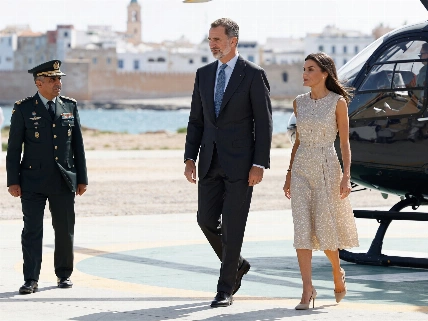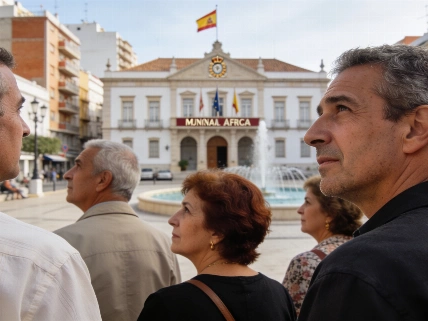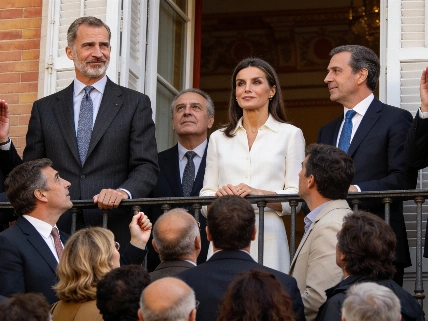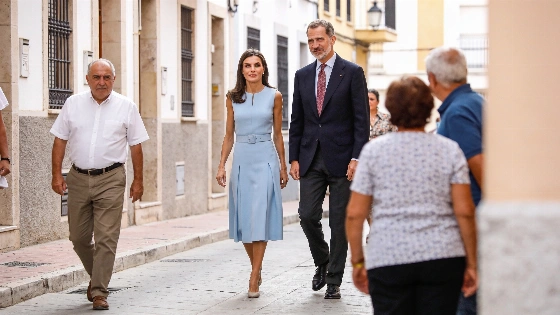
Rafa Latorre praised the royal visit as a show of support for Ceuta and said Felipe VI's defence of Spanish sovereignty contrasted with the Government's response to Moroccan naval incursions. He also recalled the border tragedy and the planned visit to Melilla.
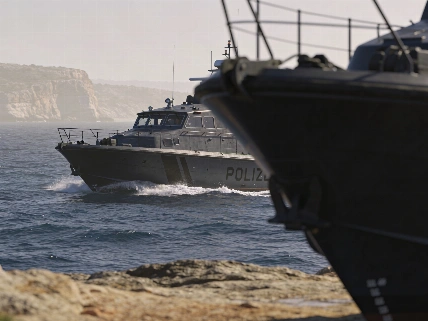
On 30 and 31 July, Moroccan warships moved through waters Spain considers its own. Journalist Rafa Latorre returned to that episode in his Wednesday monologue on Más de Uno, on Onda Cero, and criticised the Government’s handling of it.
Latorre said the Government kept the vessels’ movements from the public for 75 days. He described civilian pressure at the border alongside military activity at sea. The frigate Mohamed VI, he said, repeatedly manoeuvred in a way that challenged Spanish vessels and came close to an accident. His account of the naval movements also appears in this report on Ceuta waters. Spain considers waters within 12 nautical miles of Ceuta to be its territorial waters. Morocco disputes Spanish sovereignty over the city and the surrounding waters.
Latorre also pointed to the Spanish Navy’s deployment of a frigate, asking why the Government had not informed the public or Parliament. On 12 October, Prime Minister Pedro Sánchez confirmed that Moroccan vessels had entered waters Spain regards as its own. He called the incident isolated. Spain’s Ministry of Defence sent a frigate to move the vessels out of the disputed area.
That description was the point Latorre contested.
He cited around 90,000 people crossing the border during the crisis, saying the arrivals strained security operations. Many ended up on Trampolín and Benítez beaches. Some later moved to the hills, while others reached neighbourhoods on the outskirts. Immigration proceedings piled up, as did asylum applications. The mass crossing took place on 30 and 31 July. BBC, citing humanitarian organisations, reported that at least 141 people died during the crossing. Most of those who arrived later left the city.
Latorre contrasted the Government’s handling of the incursion with Sánchez’s changing public language. The prime minister first described the events as an attack on Spain’s territorial integrity. Later, he called Morocco a loyal partner and praised its management of the crisis. Latorre argued that cooperation with Morocco on counter-terrorism and drug trafficking did not rule out a diplomatic response to an incursion.
Against that backdrop, Latorre described Felipe VI’s visit as a message of support to a city that had waited nearly 20 years for a head of state. The King and Queen Letizia visited Ceuta and Melilla from 12 to 14 October 2026, the first visit by a Spanish monarch to both cities since Juan Carlos I and Queen Sofia travelled there in 2007.
Latorre said the King and Queen’s presence offered reassurance after weeks of uncertainty. He described the welcome in Ceuta as a civic display of patriotism, distinct from nationalism. In his address, Felipe VI called Ceuta’s frontier a European border and said any threat to it was a threat to the European Union. Spain regards Ceuta and Melilla as part of its territory and as an external border of the EU. Morocco continues to claim the cities.
For Latorre, the King’s speech set out a clear position: Spain’s sovereignty and territorial integrity must be defended, while relations with neighbouring countries should remain good. Felipe VI also said border enforcement must respect dignity and humanity. It must include legal safeguards for people who enter irregularly.
The visit included a tribute to the 140 people who died in the border tragedy. Latorre said 90 are buried at the Sidi Embarek Muslim cemetery and criticised Morocco for not claiming their bodies. He called the dead “cannon fodder” and directed the accusation at the Moroccan regime.
Before the royal tour, Latorre had said Melilla was expected to be the next stop and had waited 19 years for a head of state. The King and Queen visited both cities between 12 and 14 October. Latorre recalled Felipe VI’s point that a visit to Ceuta or Melilla is not an ordinary one.