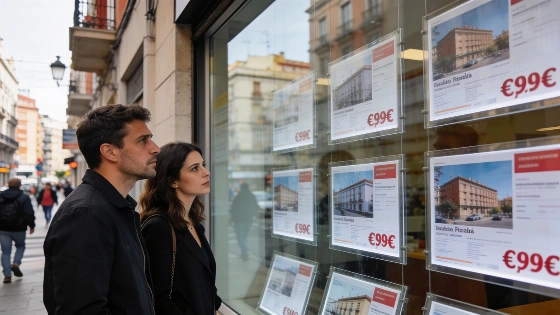
Spain’s used housing market has seen prices soar by 12.5 percent in a year, reaching an average of 2,924 euros per square meter. Yet August brought the first nationwide monthly decline since 2022, raising questions about whether the relentless surge is finally slowing.
After nearly four years of steady increases, Spain’s used housing market finally paused. In August, the average asking price for second-hand homes slipped by 0.3 percent, ending a 43-month run of uninterrupted monthly growth. Still, prices remain at record levels: 2,924 euros per square meter, up 12.5 percent from a year ago.
This shift is more than a blip for buyers and sellers. The first national monthly drop since late 2022 suggests the market may be changing course, even as annual gains continue. The latest Idealista index, published September 2, 2026, shows that while prices are still rising year-on-year, the pace of monthly increases has finally stalled. According to Idealista, this is the first monthly decline after 43 months of growth, and double-digit annual increases have now lasted for 20 months in a row.
Alternative data from Fotocasa shows an even sharper annual rise: used home prices jumped 15.6% year-on-year in August, reaching 3,166 euros per square meter, marking the 70th consecutive month of annual growth.
The 0.3 percent dip from July to August doesn’t mean homes are cheaper than last year. In fact, the market has seen 20 straight months of double-digit annual increases. The average price for an 80 square meter flat is now 233,920 euros before taxes and fees. For a 100 square meter property, buyers face 292,400 euros, not including closing costs, taxes, or mortgage interest.
Regional differences are stark. Cantabria leads with a 17.2 percent annual jump, followed by Castilla-La Mancha (16.4 percent) and Aragón (15.4 percent). The Balearic Islands remain Spain’s most expensive region, with average asking prices at 5,595 euros per square meter. Madrid and Euskadi follow, while Extremadura is the least expensive at 1,049 euros per square meter. These gaps highlight the deep divide in housing affordability across Spain.
Looking closer, provincial and city data show even sharper contrasts. Only Ourense saw a year-on-year decline, down 5.4 percent. Toledo posted the largest provincial increase at 19.9 percent. Among capitals, San Sebastián is the priciest at 6,680 euros per square meter, with Madrid and Barcelona close behind. Zamora and Jaén have the lowest capital city prices in the country.
Alongside rising purchase prices, rental costs have also surged: Idealista reports that average rents in August climbed 5.8% year-on-year to 15.1 euros per square meter per month, intensifying Spain's housing affordability crisis as both buying and renting become more expensive.
Idealista
What’s behind this sudden slowdown? Analysts point to a cooling in major cities, where more listings and price reductions are starting to appear. So far, these changes haven’t led to annual declines, and the market’s underlying strength is still there. It’s also important to note that Idealista’s figures reflect asking prices, not final sale prices. The official INE Housing Price Index, which tracks completed transactions, uses a different method and may show a slightly different trend.
For many buyers, the challenge isn’t just the headline price. Financing has become tougher, and as both property values and borrowing costs rise, households face bigger hurdles to get a mortgage. The government has recently tried to address affordability, including efforts to cap student housing costs in key regions.
Idealista has also updated its methodology, adjusting its historical data to better filter out unusual values. This technical change aims to make period-to-period comparisons more accurate, but the main point stands: Spain’s housing market is still running hot, even as the first signs of a slowdown appear in monthly data.
Despite the small dip, the reality for most Spaniards hasn’t changed—buying a home remains expensive and often out of reach, especially in the most sought-after areas. The brief pause in monthly growth may offer some hope to frustrated buyers, but with annual increases still high and regional gaps widening, the market’s imbalance continues. Unless supply grows or demand cools further, a real price correction looks unlikely. For now, Spain’s property ladder remains steep, and this first stumble after years of climbing is not yet a sign of real relief.