Authorities in València are putting extraordinary security and mobility measures in place as the city prepares for a major influx of visitors drawn by the total solar eclipse on 12 August 2026. The event, expected to last about 90 seconds, has prompted the cancellation of scheduled horse races and a response plan modeled on measures used during Fallas and the Noche de San Juan. Crowds are expected in the urban core, along the coast and around l'Albufera. Information from published analysis by Air Traveler Club, totality is expected in València at about 20:32 local time, though viewing conditions vary by location.
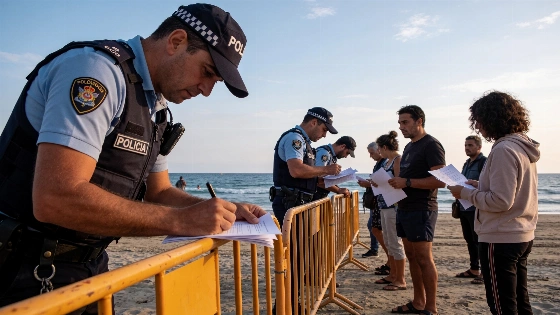
Local police will enforce phased access restrictions to the designated viewing area at Malva-rosa beach, while EMT plans to increase service to the coastline. EMT line 25 also serves the Albufera and El Palmar area, making public transport a practical way to reach the open coastal field. Certain public monuments, including the Torres de Serranos, may close to prevent overcrowding and disturbances. The city council is considering further closures if visitor numbers exceed safe limits.
Particular attention is focused on the CV-500, the road to El Saler and l'Albufera, which is expected to attract large numbers of eclipse-watchers. Under the planned restrictions, the road will close to general traffic from 18:00. Residents will be allowed through, along with emergency services and public transport. Residents will need proof of address, such as a utility bill, to reach their homes or second residences. The timing matters: published eclipse-flight analysis estimates that the Moon’s shadow will move at roughly 3,700 km/h, while the Sun’s azimuth at greatest eclipse will be about 248.4 degrees.
Devesa park will also be off-limits to the public, with more patrols in nearby areas that draw summer visitors. The restrictions aim to reduce risks from large gatherings and keep access open for emergency services. Coastal destinations such as El Saler and l'Albufera already attract summer visitors, and travel coverage has anticipated added pressure on accommodation and roads around the eclipse date.
City officials acknowledge that València has no precedent for an event of this scale, and operational plans may change up to the last minute. Crowd movement and the eclipse’s narrow viewing window add to the demands on police and transport operators, as well as emergency services. Other Spanish cities have faced similar challenges during major celebrations, including the extensive security and transport measures implemented in Madrid for La Roja’s World Cup victory parade (Madrid’s recent experience with large-scale public events). Local authorities are prioritizing flexibility and a rapid response.
A rare astronomical event coinciding with peak summer travel is likely to put added pressure on municipal services. València’s preparations draw on experience with large public gatherings, while the eclipse offers a tightly timed viewing chance: published analysis places totality in nearby Zaragoza at about 20:29 and in León at about 20:28, before the expected 20:32 window in València. Visitors are advised to use public transport and monitor official updates for changes to access and mobility arrangements. Those who need to enter restricted areas should carry proof of residence.