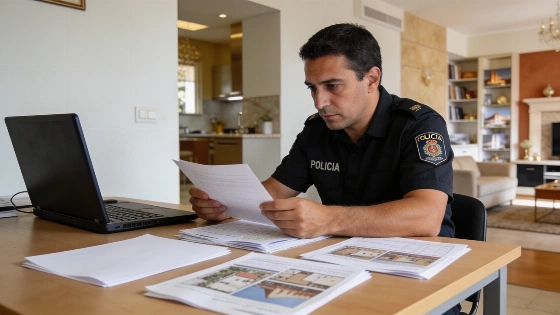
A major criminal group in Valencia used luxury property, fake divorces and cryptocurrency to launder drug profits. Police linked 11 suspects to seven companies after seizing 4.5 tonnes of cocaine.
Spanish authorities have exposed a sophisticated money laundering operation in Valencia, where a criminal network allegedly funneled profits from large-scale cocaine trafficking through real estate, transport firms, gyms, and cryptocurrency platforms. The investigation, led by Judge Vicente Ríos of Valencia’s Court of Instruction No. 15, centers on a group accused of storing 4.5 tonnes of cocaine—worth an estimated €60 million—at the city’s port.
According to court documents reviewed by EL PAÍS, the network relied on a web of companies and family members to disguise the origins of illicit funds. The suspects, arrested in July 2025 during the dismantling of the so-called Spider organization, are believed to have used shell companies, luxury property purchases, and even staged divorces to shield assets from law enforcement. Eleven of the 81 detained individuals are now under scrutiny in a separate, confidential money laundering probe.
Investigators have identified seven companies linked to the suspects, including a Valencia-based real estate and asset management firm with €610,000 in capital, where one alleged ringleader, Ivan T., is a partner and his wife serves as administrator. The scheme also involves a Beniparrell transport company with €1.2 million in 2024 sales, a construction firm in Alboraya tied to a relative of another suspect, and a Valencia gym and nutrition clinic where a person under investigation holds a 30% stake but is absent from the business’s bank accounts.
Authorities believe the group used relatives and front men to move funds discreetly, requesting detailed information from Spain’s Social Security and Tax Agency. The court has ordered a thorough review of the suspects’ assets, including bank accounts, shares, deposits, insurance, and safe deposit boxes, as part of the ongoing Spider case’s money laundering branch.
One key figure, identified as Miguel M., acted as a real estate intermediary, creating inactive companies to register properties and serving as a trusted facilitator for the main suspects. He is also linked to a Valencia cryptocurrency trading company with 33 employees and over €35 million in 2022 sales. Through this platform, properties were transferred to the main targets of the investigation, highlighting the growing role of digital assets in laundering criminal proceeds.
The investigation has uncovered a range of tactics used to protect criminal wealth. In one case, suspect Ramón B. allegedly orchestrated a fake divorce, transferring assets to his wife to avoid seizure. Despite the legal separation, evidence showed the couple continued to share hotel rooms, and monthly transfers for child support and an inflated payment of €622,000 for a luxury apartment raised further suspicion.
This new money laundering probe adds another layer to the Spider case, which revealed one of Spain’s largest drug trafficking networks. The July 2025 operation led to 81 arrests, including port workers, truck drivers, and a Guardia Civil officer. Over three years, the organization supplied the market through the port of Valencia, now the third-largest entry point for cocaine into Europe after Antwerp and Rotterdam, with prices reaching €14,000 per kilo.
Spain’s ongoing battle against organized crime at its ports has prompted authorities to strengthen controls and oversight. The complexity of laundering operations, often involving family members and legitimate businesses, poses a significant challenge for law enforcement. Similar efforts to disrupt criminal networks have been reported in other regions, such as the recent dismantling of a group trafficking minors from the Canary Islands, as detailed in this related report.
Spain’s strategic location and extensive port infrastructure make it a key transit point for international drug shipments. The use of real estate, transport, and digital assets for laundering criminal proceeds reflects broader trends in organized crime across Europe. Authorities continue to adapt their investigative methods to keep pace with increasingly complex financial schemes, aiming to disrupt both the trafficking and the laundering of illicit funds.