A criminal group recruited girls from a Gran Canaria shelter, sending them to France for sexual exploitation. Six minors were rescued and five suspects arrested. The case highlights ongoing challenges in Spain’s migrant protection system.
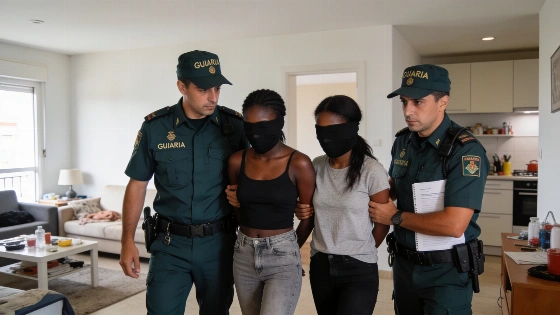
A criminal network that targeted vulnerable migrant minors in Gran Canaria has been dismantled by the Guardia Civil, following an operation that led to the rescue of six underage girls and the arrest of five individuals. The group, operating from the Firgas reception center, allegedly lured girls with false promises of work in France, only to force them into sexual exploitation upon arrival in Paris.
The investigation began after one of the victims, who had been convinced by a fellow resident to flee the Firgas center in late November 2024, managed to escape her captors in Paris and contact her former educator from Bilbao. Her testimony, now protected, was instrumental in exposing the network’s methods and identifying other victims. According to the Guardia Civil, all the girls involved were minors from sub-Saharan Africa, recently arrived in Spain by boat, and lacking family support or Spanish language skills.
The traffickers provided the girls with fake passports listing them as adults and arranged flights to mainland Spain, with Paris as the final destination. Some victims were asked to pay small sums for these documents. Once in France, the girls were confined and exploited, unable to leave the premises. The operation, named Jabany, revealed a clear division of roles within the group: a leader known as Baba and his partner, both legally residing in Spain, oversaw logistics, while another minor inside the center recruited new victims. Two additional suspects were responsible for producing the false documents, with one using his restaurant as a handover point.
The case gained momentum in March 2025, when four girls attempting to leave Gran Canaria with forged documents were intercepted at the airport. This temporarily halted the network’s activities, but by late June, another minor had disappeared, prompting further action. On 29 June, coordinated raids in Arucas and other locations led to the arrest of all five suspects and the seizure of evidence, including a stolen Mauritanian passport, numerous ID photos of minors, cash, and electronic devices. Authorities are now investigating whether other missing minors from the same center may have fallen victim to the same network.
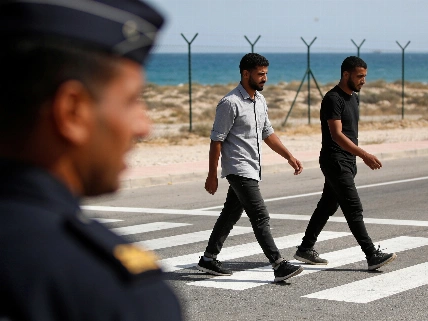
The arrests come amid heightened debate over the distribution and care of unaccompanied migrant minors in Spain, particularly after the recent influx in Ceuta and ongoing reluctance from some regional governments to accept new arrivals. The situation echoes previous tensions, such as those seen in Mallorca during royal events, where public attention has focused on institutional responses to vulnerable groups. For example, the recent shift in protocol at the Marivent Palace reception highlighted how changes in tradition can spark broader discussions about social responsibility and public policy.
Spain remains a key entry point for migrants seeking to reach Europe, with the Canary Islands often serving as the first stop for those arriving by sea. The protection of unaccompanied minors is a persistent challenge, as criminal groups exploit gaps in oversight and the desperation of young migrants. The Guardia Civil’s operation underscores the need for stronger safeguards in reception centers and more coordinated efforts across regions and borders to prevent trafficking and ensure the safety of vulnerable children.