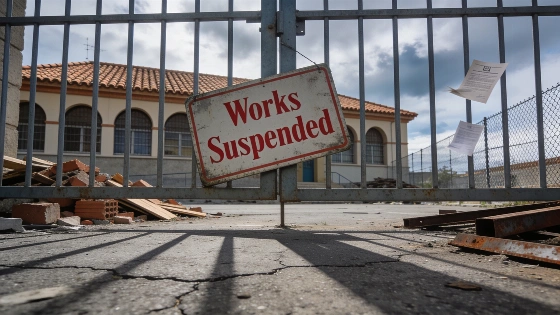
The Superior Court of Justice of the Valencian Community has ruled against the Generalitat’s blanket suspension of school-project delegations approved during the Botànic government’s caretaker period, dealing a setback to the Partido Popular (PP) administration. The dispute involves 15 delegations for public-school construction and renovation works, with management assigned to municipalities. The court found the delegations could not be invalidated solely because they were approved shortly before the 2023 regional elections. The administration’s caretaker status, by itself, did not provide a clear legal basis to block them.
The dispute centers on Plan Edificant, an initiative launched in 2017 by the previous Botànic coalition government. PSPV-PSOE and Compromís formed the coalition, with Unides Podem also part of it. The programme aimed to accelerate the renovation and construction of public schools. The Generalitat delegated project management to local councils, which handled technical work and tenders, while the regional government provided funding once requirements were met. Across two legislative terms, 820 delegations were processed, also to the 15 approved during the caretaker period.
After taking power, the PP-led Consell challenged those final 15 delegations, arguing they had been rushed through months before the 2023 elections and could be detrimental. The suspension affected projects ranging from new classrooms to impressive renovations, prompting legal challenges from municipalities. The ruling turns on the limits of a caretaker administration: without an express statutory restriction or an extraordinary circumstance, the timing of the approvals alone was not sufficient grounds to annul them.
Mislata and Burjassot pursued court action after their projects were halted, as did Albalat dels Sorells. Senyera and Casinos also brought cases. The decision removes a legal obstacle to the works, including a €3.3 million package in Mislata and €2.3 million for the Fernando de los Ríos school in Burjassot. Construction has not immediately resumed in all affected municipalities: the Generalitat’s legal service has appealed the judgment to Spain’s Supreme Court, and the projects remain subject to that process. The reported period for preparing the cassation appeal is 30 days.
The funding dispute has also sharpened after the Generalitat redirected €13 million originally assigned to school works to cover operating costs at public schools: €6.5 million for infant and basic education, and €6.5 million for secondary education. The education department said the amendment followed a finding that budget credit was insufficient to cover those schools’ expenses. An education union criticized the move as evidence of a lack of interest in improving school infrastructure. It said the decision added to the neglect of the 15 centres linked to Plan Edificant.
Plan Edificant projects have continued elsewhere. In Cullera, modernization works at IES Llopis Marí have begun under the programme, with an investment of €2.3 million. The project shows that work under the programme continues beyond the 15 delegations at the centre of the litigation.
The regional education department has not clarified whether the disputed projects are included in the recently announced €1.4 billion infrastructure plan. Former officials say the plan largely covers ongoing works from the original Plan Edificant, rather than new initiatives. The dispute has highlighted broader tensions over regional funding and governance in Spain. Similar debates have emerged in other autonomous communities, including when Castilla-La Mancha’s leader criticized the national funding model for perpetuating inequalities, a topic explored in this recent analysis of regional finance disputes.
Meanwhile, the Generalitat has announced that, starting in the second half of July, it will give all schools an extraordinary allocation of €5,000 to €25,000 for climate-control improvements. The fate and timing of the larger, long-delayed projects remain tied to the appeal. Its outcome will affect municipalities seeking to carry out the works, as well as students and staff who rely on the schools’ facilities.
Plan Edificant was designed to address chronic infrastructure deficits in Valencian schools, many of which still operate in outdated facilities or temporary structures. The ruling addresses the legal basis for suspending the 15 caretaker-period delegations. With the appeal pending and school operating budgets under separate pressure, the delivery and financing of education infrastructure remain ongoing issues for the Generalitat and municipalities.