A retired man from Valencia will not have to return over €20,000 in unemployment subsidies after a court found the error was solely administrative. The ruling highlights the limits of state claims when citizens act transparently and in good faith.
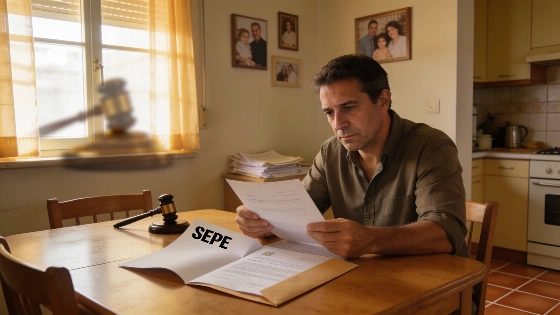
When the Servicio Público de Empleo Estatal (SEPE) demanded that a Valencian pensioner repay €20,621.48 in unemployment subsidies, the case seemed straightforward: the agency claimed he had received benefits he was not entitled to. But a recent ruling by the Tribunal Superior de Justicia de la Comunidad Valenciana has upended that expectation, siding with the retiree and setting a notable precedent for similar disputes.
The dispute began after SEPE discovered that the man, who had received the subsidy for people over 52 between May 2019 and March 2023, did not meet the minimum requirement of six years of unemployment contributions. Instead, his record showed only 1,930 days—short of the threshold. SEPE revoked the benefit and demanded full repayment, arguing the approval had been a mistake.
Initially, the Social Court No. 16 of Valencia ruled in favor of SEPE, ordering the pensioner to return the entire sum. The retiree appealed, insisting he had never concealed information or provided false data. He argued that SEPE had access to all his employment records and that he had simply applied for the subsidy, reporting his income as required.
Good Faith and Administrative Error
On appeal, the higher court took a different view. The judges found that the error was entirely administrative: SEPE had all the necessary information to verify the applicant's eligibility before granting the subsidy. The court emphasized that the retiree had acted in good faith, without fraud or misrepresentation, and that the funds had been used to cover basic living expenses during a period of low income.
The ruling drew on the Spanish Supreme Court's decision 1186/2024 and the European Court of Human Rights' doctrine in the Čakarević v. Croatia case. Both precedents establish that when a public benefit is granted due to an error solely attributable to the administration, and the recipient has acted transparently, the state cannot automatically demand repayment—especially when the money has already been spent on essential needs.
Limits of State Reclamation
The court noted that forcing the pensioner to return the full amount would unfairly shift the consequences of the administration's mistake onto the individual. The judges described such a demand as disproportionate, given the absence of deceit or concealment. They also highlighted the social purpose of the subsidy, which is designed to support those with limited resources as they approach retirement age.
While the decision does not eliminate the possibility of reclaiming wrongly paid benefits in all cases, it sets clear boundaries: when the error is exclusively administrative, the recipient has acted in good faith, and the funds have been used for basic needs, repayment may not be justified. The ruling can still be appealed to the Supreme Court.
Context and Implications
According to Talent24h, this case underscores the importance of administrative diligence in Spain's social security system. The over-52 subsidy is a lifeline for many older workers who have lost their jobs and face barriers to re-entering the workforce. The court's decision may influence future cases where citizens are caught between bureaucratic mistakes and strict repayment demands.
For now, the Valencian pensioner can keep the €20,621.48 he received, closing a legal chapter that highlights the balance between administrative responsibility and the rights of individuals who rely on public support.