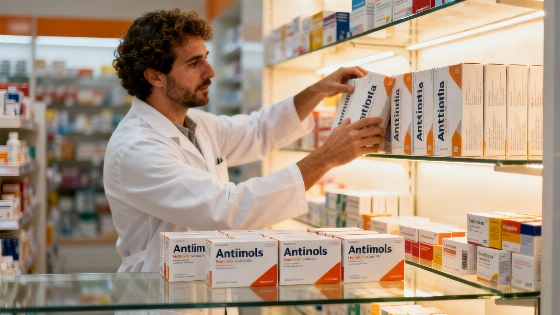
Spain to Change Antibiotic Packaging: Excess Pills Will Disappear. The country will revise antibiotic packaging formats to match standard treatment durations. This aims to reduce the risk of improper use and decrease leftover medications at home. The new regulations are being introduced gradually.
In the coming months, Spain will begin a gradual change in the packaging formats of several antibiotics. The decision was made at the national level: now the number of tablets in boxes will be calculated so that it is enough for exactly one standard course of treatment, with no leftovers. This measure is aimed at preventing surplus medication from remaining in home medicine cabinets, which are often used without a doctor's prescription or discarded, creating unnecessary pharmaceutical waste.
The initiative is being implemented under the auspices of AEMPS as part of the national plan to combat antibiotic resistance. As Talent24h notes, the packaging revision is related to the fact that many existing formats contain more tablets than are needed for typical treatment regimens. As a result, patients often keep leftover medications, which raises the risk of self-medication at the first signs of illness and encourages the development of bacterial resistance to antibiotics.
Reasons for the changes
In recent years, the medical community has increasingly drawn attention to the problem of excessive and improper use of antibiotics. According to AEMPS, around 35,000 deaths linked to antibiotic resistance are recorded annually in European Union countries. The economic and social costs are estimated in the billions of euros. One of the causes of this situation is precisely the presence of leftover pills at home, which are used without medical supervision.
Furthermore, updated scientific data show that standard treatment courses are often shorter than previously thought. This allows a reduction in the number of units per package without compromising therapy effectiveness. The new formats are intended to be more convenient for patients and reduce the risk of incorrect medication use.
Which medications will change
Packages of seven active substances are subject to review. Among them are amoxicillin (30 tablets), amoxicillin with clavulanic acid (30 tablets), phenoxymethylpenicillin (40 tablets), cloxacillin (40 tablets), cefuroxime (20 tablets), cefixime (21 tablets), and fosfomycin (2 and 12 doses). These formats will be gradually withdrawn from circulation.
They will be replaced by new, more compact packages: for example, amoxicillin 250 mg — 20 tablets, benzathine phenoxymethylpenicillin in suspension — 160 ml, as well as amoxicillin with clavulanic acid in 500/125 mg and 250/62.5 mg doses — 20 tablets each. This approach will allow for more precise adherence to prescribed treatment regimens.
Transition period
The implementation of the new rules will take place in stages. Manufacturers are given three months to adapt from the date the decision is published. After nine months, production of the old formats will cease, and after fifteen months, AEMPS may begin the procedure for their final withdrawal.
It is important to note that already released packages will not disappear immediately: their sale and use are permitted until their expiration date or for five years. For patients, the procedure for taking antibiotics does not change—these medications must still be prescribed by a doctor, and the course and dosage are determined individually.
Significance for the healthcare system
The revision of packaging formats is part of a comprehensive strategy to reduce risks associated with antibiotic resistance. Having fewer leftover medications at home should decrease instances of self-medication and improper drug use. This, in turn, will help slow the spread of resistant bacterial strains and lessen the burden on the healthcare system.
The introduction of new packaging standards reflects an effort to make medical care more precise and safe. For patients, this means greater transparency and convenience, and for doctors, an additional guarantee that treatment will follow the prescribed regimen without unnecessary risks.