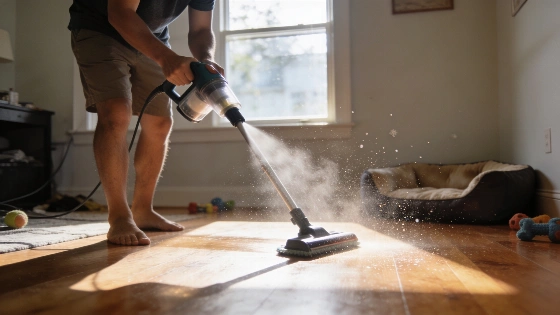
Fine dust left behind on hard floors can make daily cleaning frustrating. Even after sweeping, tiny particles may remain on ceramic or laminate floors. They can linger on vinyl, too, while dry sweeping may send some dust back into the air. One simple trick circulating on social media and cleaning forums is to wrap a broom’s bristles or base in aluminum foil before sweeping.
People who try the method say it helps gather fine dust, along with pet hair or lint. Static electricity offers a plausible explanation: in dry indoor air, fine particles can cling to floors and cleaning fibers. But foil’s conductivity alone does not show that wrapping a broom in it measurably improves dust collection. Results may depend on the broom, floor, and sweeping technique.
How Aluminum Foil Changes Sweeping
Advocates say the foil changes the broom’s interaction with static, helping debris gather instead of scatter. In homes with pets, they report that hair and fluff are easier to collect, including around corners and grout lines. Jesun’s cleaning guidance recommends short, controlled strokes to keep particles from being thrown into the air. It also recommends soft bristles for fine dust.
Some users also say foil keeps hair and lint from tangling in the bristles, making the broom easier to clean afterward. It’s a low-cost household adjustment, not a standard cleaning procedure. For fine dust, established alternatives include a slightly damp microfiber mop, which can capture particles, or vacuuming followed by a damp microfiber pass. Southern Living also recommends regular dusting with damp microfiber and using a HEPA-filtered vacuum. The commonly cited HEPA specification is 99.97% filtration of airborne particles under applicable test conditions, not a measure of how well a broom collects dust from a floor.
Applying the Trick: Step by Step
Start by cutting a piece of aluminum foil large enough to cover the desired section of the broom. Wrap it around the bristles or rigid base and press it firmly into place so it won’t come loose during use. Keep the edges smooth and clear of the floor, then sweep with short, controlled strokes. Users who report an immediate improvement say dust and hair gather more readily, though results can vary with the debris and surface.
How Often to Replace the Foil
Replace the foil every few days, or sooner if it becomes wrinkled, dirty, or worn. The interval depends on how often the broom is used and the type of flooring. A high-traffic area may call for more frequent changes, while occasional use in one room may let the foil last longer. Check that it remains secure before each cleaning session.
Tips for Best Results
Make sure the foil covers the section most exposed to dust and hair, and avoid loose edges that could snag while sweeping. The trick is intended for fine dust, along with pet hair or lint, on hard surfaces; it does not replace routine floor care. Oak Custom Remodeling’s dust-control guidance notes that sweeping dry dust with a standard broom can send particles back into the air, so vacuuming or following with a slightly damp microfiber mop can help capture residue.
The foil method has caught on because it is simple and inexpensive, and users report that it can make everyday sweeping easier. Its proposed static-electricity explanation is plausible, but the practical result depends on the floor and broom at hand. For households seeking a dependable way to pick up fine dust, controlled sweeping and a damp microfiber finish remain useful options.