Campo de Gibraltar Awaits Change After Brexit, but Without Illusions. The eight-million-strong agglomeration on the Gibraltar border remains among the leaders in unemployment. The new EU-UK agreement promises change, but locals do not expect rapid improvements.
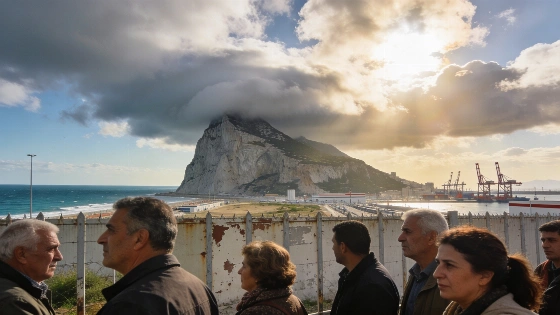
In Campo de Gibraltar, home to nearly 300,000 people, changes related to the new agreement between the EU and the UK on Gibraltar are once again under discussion. Despite government promises of the imminent removal of Europe’s last land border, locals are not expecting rapid improvements. According to local experts, even if formal barriers disappear, social and economic problems will remain the same.
Border and disappointment
The region’s eight municipalities—from Algeciras to Tarifa—have to live between two borders: Gibraltar and Morocco. The country’s largest port and a powerful industrial cluster are located here, but the unemployment rate consistently exceeds the Andalusian average. In some areas of Algeciras and La Línea, unemployment stays above 20%, while infrastructure projects, such as railway modernization, have stalled for years.
Local residents note that they feel isolated not only from the rest of Andalusia, but also from all of Spain. According to Jesús Verdú, head of the University of Cádiz campus in Algeciras, geographical isolation and poor infrastructure development have fostered a distinct identity among the population. Many do not feel connected to provincial or national institutions, which is reflected in levels of political participation: at the last elections in Algeciras turnout did not exceed 47%, and in La Línea—40%.
Politics and local interests
Against the backdrop of low political engagement in the region, the 100x100 Unidos party, founded by La Línea mayor Juan Franco, is gaining popularity. For the first time, this force is running in elections across the entire province of Cádiz, aiming to win a mandate that could prove decisive in forming a majority in the Andalusian parliament. For some voters, as noted by Los Barrios entrepreneur Saray Rojas, ideology matters less than the chance to have representation that will defend the specific interests of Campo de Gibraltar.
However, even with a strong local player, residents harbor no illusions about sweeping change. According to Verdú, without substantial investment in education and the social sector, the region will remain vulnerable to crime and economic imbalances. Historically, a “reactive” identity has formed here: the population feels like it's on the periphery but does not unite to collectively address demands to the authorities.
Economy and Social Challenges
Despite major industrial enterprises and a strategic port, the region has failed to create a stable environment for a middle class. Skilled professionals come from other parts of the country, while locals face limited employment opportunities. This exacerbates social stratification and fuels the growth of illegal markets, including those linked to drug trafficking.
According to representatives of local associations, the industrial development that began during the Franco era brought not only economic but also environmental problems. At the same time, tax revenues from large companies have not led to a noticeable improvement in the quality of life for most residents. Experts note that without comprehensive changes in social and educational policy, the region can hardly expect a breakthrough.
Expectations and skepticism
Ahead of the elections and amid discussions of a new agreement on Gibraltar, politicians and ministers have been frequent visitors to the region. However, as locals admit, the topic of Brexit no longer generates the same interest: many believe that even after the removal of formal barriers, the real problems will remain unresolved. According to local activists, any agreements will only be meaningful if accompanied by long-term investments in infrastructure and the social sector.
The situation in Campo de Gibraltar is reminiscent of other regions of Spain where economic and social challenges require not only political decisions but also systemic changes. For example, in Catalonia, the authorities recently allocated significant funds to improve conditions in schools, which has become a noticeable step in addressing regional imbalances — more details can be found in the article about the large-scale installation of fans in Catalonia's educational institutions.