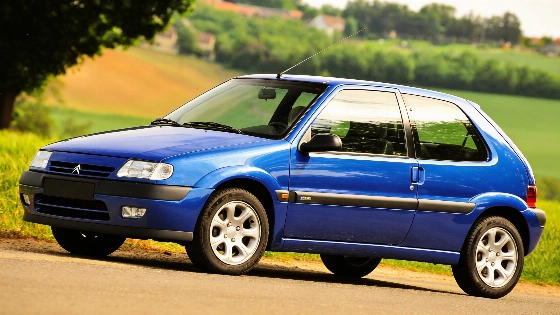
30 Years of Citroën Saxo VTS: How the Iconic Hatchback Changed the Approach to B-Segment Sports Models. The Citroën Saxo VTS marks its 30th anniversary—a model that not only set new standards for compact sports hatchbacks, but also created an entire culture among young drivers and motorsport fans in Spain. What explains its cult status and why does interest in it remain strong despite modern trends?
Main fact: In 2024, it will be 30 years since the debut of the Citroën Saxo VTS—a compact sports hatchback that made a significant impact on the B segment and remains popular among enthusiasts, especially in Spain.
Essence of the news
The Citroën Saxo VTS, launched in 1994, became one of the most striking models among affordable sports hatchbacks. Thanks to its lightweight body, naturally aspirated 1.6 16V engine (120 hp), and minimal electronic intervention, it quickly gained popularity with young drivers and motorsports fans. Today, the Saxo VTS is considered a cult car on the Spanish secondary market and a symbol of the era of 'honest' driver’s cars.
Why this matters
The Saxo VTS was not just another sporty version of a mass hatchback but a model that set the standard for an entire class. Its success demonstrated that a compact, affordable car could be truly exciting and suitable for motorsport. For the Spanish market, it was one of the first mainstream 'entry tickets' into the world of racing and tuning, shaping an entire generation of car enthusiasts.
Context
In the 1990s, the B-segment was just beginning to take shape as a separate category with its own style and audience. The Saxo VTS replaced the Citroën AX and immediately stood out for its combination of lightness, handling, and simple design. Unlike modern hatchbacks dominated by electronic aids and hybrid technologies, the Saxo VTS focused on mechanical 'honesty' and a direct connection to the road. This made it popular not only among regular drivers but also in motorsport: the model was widely used in rally, circuit racing, and one-make cups (Saxo Cup, Saxo Challenge).
Who this concerns
- Enthusiasts and collectors: The Saxo VTS remains in demand on the secondary market, especially in Spain, where it is valued for its driver's character and ease of maintenance.
- Young motorsport drivers: Thanks to its affordability and serviceability, the model is often used for the first steps in motorsport.
- Classic car enthusiasts: The Saxo VTS is an example of an era when compact sports cars were as simple and lightweight as possible.
What could change
Against the backdrop of the market's broad shift to electric vehicles and the increasing complexity of new models, interest in the Saxo VTS and similar 'old-school' hatchbacks may only grow. Their value for collectors and motorsport drivers is likely to increase, especially as the number of surviving examples dwindles.
What remains unknown
- Citroën has no official plans to revive or reimagine the Saxo VTS.
- Long-term price trends on the secondary market depend on vehicle condition and the overall interest in classic models.
- The impact of new urban restrictions (environmental zones, taxes) on the use of old petrol sports cars in Spain is still not fully clear.
How not to misinterpret
- The Saxo VTS is not a mass-market sports car, but a niche model for enthusiasts: its cult status does not mean it is suitable for everyday use in modern conditions.
- Its technical specifications should not be overestimated by modern automotive standards: the main value lies in the feeling behind the wheel and its historical context.
- Comparisons with modern electric cars are incorrect: the Saxo VTS is a product of a different era and philosophy.
Conclusion
The 30th anniversary of the Citroën Saxo VTS is a reason to remember how a compact and affordable hatchback can become a true legend for an entire generation. Its influence on motorsport, driving culture, and the used car market in Spain remains significant to this day. For enthusiasts, the Saxo VTS is more than just a car; it's a symbol of an era when driving feel and simplicity mattered more than technology.