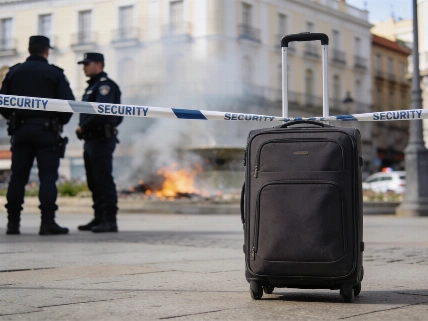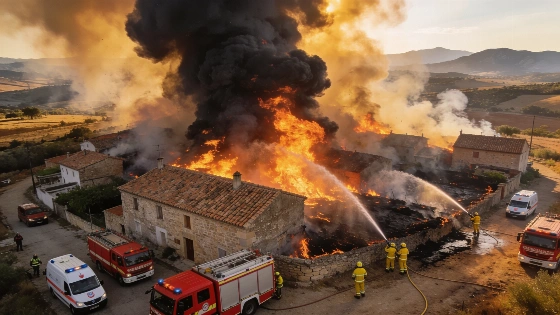
Emergency services in Zamora endured a difficult night as the wildfire in Fermoselle continued to spread, prompting the evacuation of Villar del Buey and Pasariegos. Nearly fifty firefighting units worked through the night to protect homes and urban centers, building containment lines and attacking the flames directly. Among those evacuated from Villar del Buey were 25 elderly residents of the local care home. Operational sources said they were relocated to Los Tres Árboles residence in Zamora city.
Firefighting resources included six technical specialists and thirteen environmental agents, alongside thirteen crews. The deployment also included five fire engines, three machinery teams and eight fire brigades from the Zamora and Salamanca provincial councils. The operation remained on high alert. Forecasts called for stronger winds later on Thursday, which could complicate containment efforts.
As the situation in Zamora remained volatile, emergency teams monitored stabilized fires in Ávila, Madrid and Toledo to prevent flare-ups. Crews also kept watch on active hotspots in Castellón and Tarragona during a critical period for Spain, already under strain from a heatwave. Spain’s 2026 high-risk fire campaign recorded 4,944 incidents and 245,653 hectares of forest burned between June and September, about 2.5 times the average for the previous decade, information from EFE Verde. Fires in the following weeks added a provisional 5,000 hectares and two more large forest fires.
Government attention shifted to the affected regions. Prime Minister Pedro Sánchez was scheduled to visit the Advanced Command Post in Navaluenga, Ávila, accompanied by Castilla y León President Alfonso Fernández Mañueco, Interior Minister Fernando Grande-Marlaska and regional government delegate Nicanor Sen. At the time, the Ávila fire was described as Spain’s largest recorded, with estimates of approximately 50,000 hectares burned. Later satellite-based estimates put the affected area at about 37,800 hectares, including roughly 33,900 hectares of forest land and 27,600 hectares of wooded land. EFE later reported that the Burgohondo fire had burned nearly 38,000 hectares across around 20 municipalities, with a perimeter of about 160 kilometers, making it Spain’s second-largest wildfire since records began. The fire prompted the evacuation of approximately 35,000 people from 20 localities, while more than 10,000 residents were confined in five villages.
The Ávila blaze’s consequences continued beyond the emergency response. By 21 October, more than 100 complaints over fire damage had been filed, according to Ávila environmental prosecutor Carmen Barberán. The Guardia Civil detained an alleged responsible party on suspicion of serious negligence, and a second person was also under investigation. Barberán said the inquiry would require large resources and could take a long time, given the size of the affected territory and the number of claims. The fire also reached the Valle de Iruelas protected forest and two catalogued forests in the Gredos mycological area. Valle de Iruelas, in El Barraco, covers 5,575 hectares; Monte del Concejo, in Navaluenga, covers 3,144 hectares. Fundación Cesefor’s Micocyl program advised people to avoid affected forests and not collect mushrooms there during recovery, citing the need to let damaged areas recover and the hazards that can persist after a fire.
Recovery work in Ávila continued after the basic blaze was extinguished. The Castilla y León government was working on economic and social recovery across 22 affected municipalities, including emotional support. Its commitment was described as “total and complete.” The scale of the damage left restoration, public access and compensation as issues beyond the immediate firefighting phase.
Spain’s recurring wildfires have brought repeated evacuations and impressive property losses in recent years. Similar incidents in Ávila, Madrid and Castellón have previously forced thousands from their homes, as detailed in this report on the impact of wildfires across central Spain. The current crisis exposes the vulnerability of rural communities and the mounting demands on emergency services during extreme weather.
Wildfires remain a recurring threat in Spain, particularly during periods of high temperatures and drought. Dry vegetation, strong winds and heatwaves can accelerate the spread of flames and make containment harder. Authorities continue to urge residents in at-risk areas to follow evacuation orders and watch for official updates as conditions change.