Wildfires sweeping through central Spain have left communities coping with evacuations, property losses and lingering uncertainty. In La Vall d'Uixó (Castellón), residents Julián and Manoli returned home after the Generalitat lifted the local lockdown on Tuesday. The fire’s scars remain visible across the region. Their experience was part of a wider emergency in late July, when extreme heat, dry vegetation and strong winds helped lead fires through populated areas in Ávila, Madrid, Toledo and Castellón.
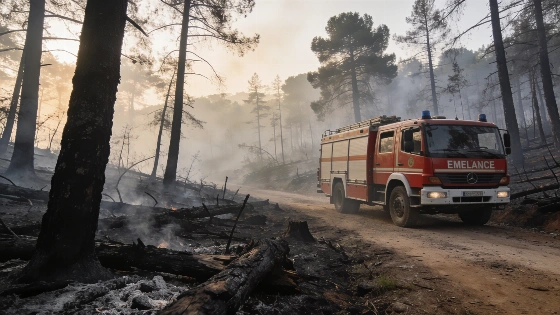
Emergency crews have been working around the clock in Ávila, where firefighters continue to tackle hotspots and keep the flames from spreading. In Cebreros (Ávila), homes suffered impressive damage, their walls charred and interiors blackened. Dozens of people were forced from their homes. Many queued for breakfast at a makeshift shelter in a sports hall in Talavera de la Reina (Toledo), waiting for news about their properties. The largest documented blaze began near Burgohondo, Ávila, on 22 and 23 July. Spain’s Civil Guard attributed its ignition to sparks from heavy machinery, Reuters reported.
Onda (Castellón) was among the hardest-hit municipalities, as fires threatened residential areas and triggered rapid evacuations. A Spanish flag fluttering near a home at the fire’s edge became a symbol of ability to recover for many locals. In Piedralaves (Ávila), meanwhile, 62-year-old blacksmith Paulino Domínguez surveyed the ruins of his workshop, reduced to ashes.
Madrid’s Pelayos de la Presa also suffered extensive losses. Burnt belongings and dozens of destroyed boats line the area, showing the scale of the disaster. Near Cebreros, firefighters turned to controlled burns to halt the fire’s advance and protect remaining structures.
Spain escalated its response during the week of 24 to 30 July, declaring Situación Operativa 3, an unprecedented operational level. The Unidad Militar de Emergencias took command in the worst-affected provinces, including Ávila, Castellón and Madrid. Greece, Italy, Portugal, Serbia, Türkiye and France also sent firefighting support. The response operated from 42 bases, and nearly one-fifth of the campaign’s total aviation hours were logged that week, information from Ministry for the Ecological Transition and the Demographic Challenge figures reported by Europa Press.
The scale of the emergency is clear in the resources deployed. Spain’s firefighting aviation effort recorded more than 10,000 flight hours and 50,259 water drops during the 2026 campaign. At the peak, emergency calls and operations tripled, while firefighting deployments doubled. More than 60,000 people were evacuated during the Burgohondo incident; across the wider basic-Spain fires, more than 63,000 people were moved.
The Burgohondo fire was declared fully extinguished on 3 October, after 73 days. Reuters reported that it had burned approximately 63,000 hectares, while a separate MITECO-derived assessment put the area at 33,943 hectares. The figures reflect different assessments of the fire’s area and stage of accounting. Damage affected homes and farms, as well as restaurants and sports facilities. Later rainfall carried ash and debris into the watershed, compromising water supplies in communities in the Tiétar area. Residents there said tap water was unusable, and the consequences continued after the flames were out.
The humanitarian response continued after evacuations. The Spanish Red Cross reported involvement in 71 fires, opening 99 shelters and providing accommodation, food and other assistance to 5,890 people forced to leave their homes. It announced a €2 million recovery plan to support more than 1,000 people in affected communities, addressing residents’ longer-term needs after emergency operations end.
These fires echo recent emergencies in the region, where mass evacuations and property losses have become all too familiar. For a broader look at how wildfires disrupted life and forced thousands from their homes in Castellón, see this detailed report on the large-scale evacuations in Vall d'Uixó.
Spain’s wildfire seasons have grown increasingly severe in recent years, as prolonged heatwaves and dry conditions fuel more frequent and intense incidents. By 21 October, Copernicus-based figures reported by Europa Press put the country’s burned area at 301,413 hectares, or 43% of the European Union total. The July fires in Madrid, Ávila and Toledo accounted for more than 77,000 hectares. For affected residents, the immediate focus remains recovery and rebuilding as authorities assess the damage and plan for future risks.