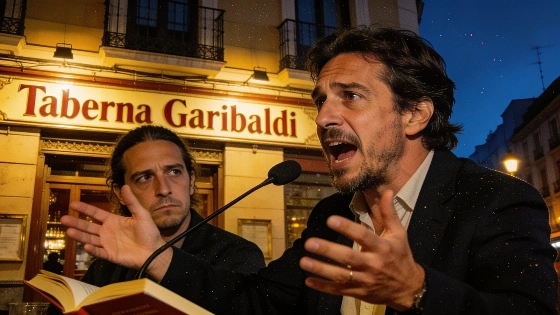
Actor Willy Toledo has criticised former Podemos leader Pablo Iglesias over his personal and business decisions. Speaking at the presentation of Sergio Gregori’s new book, Toledo questioned Iglesias’s consistency after he moved to a detached house in Galapagar. He also challenged the financial structure behind Taberna Garibaldi, a business project associated with Iglesias.
Iglesias and Irene Montero bought the Galapagar property in May 2018. It was reported to measure about 268 square metres and to have cost approximately €660,000. The couple said they took out a joint €540,000 mortgage with Caja de Ingenieros, repayable over 30 years. In a joint statement, they said they had “a €540,000 mortgage together, which we will repay gradually over 30 years,” information from El Español. The purchase implied an initial contribution of roughly €120,000, before taxes and renovation costs.
Toledo argued that Iglesias’s purchase of a high-profile property sharply contrasts with the values he once promoted. The actor recalled Iglesias’s warnings against politicians who leave their neighbourhoods for upscale homes, saying such a move undermines the credibility of his earlier statements. Montero later defended the purchase as a family housing decision, saying it was “to live in, not to speculate,” as reported by El Español. The controversy became a recurring point in debates about Podemos leaders’ housing choices and ideological consistency.
The criticism went beyond real estate. Toledo questioned why Taberna Garibaldi, which he described as a project led by a self-described socialist, was set up as a private business rather than a cooperative. He argued that a cooperative model would better match the ideology Iglesias has publicly supported. Toledo also said the business, along with initiatives such as Canal Red, had become closely identified with Podemos, blurring the lines between political activism and private enterprise.
Toledo further claimed that this overlap had created a sense of obligation among Podemos supporters to back Iglesias’s private ventures. He said the situation fostered “toxic loyalties” within the party, with members feeling compelled to support both the political movement and the former leader’s business interests. He was particularly critical of financial support for Taberna Garibaldi from party sympathisers, suggesting that some contributors knew Iglesias was financially comfortable yet continued to contribute.
Separately, laSexta columnist Antonio Maestre reported that a CNT union section had raised complaints about the situation of some workers at Canal Red and Taberna Garibaldi. That labour-related scrutiny is part of the wider debate around enterprises associated with Iglesias, separate from Toledo’s claims about supporters’ financial backing.
The dispute over political consistency and the intersection of private business with party identity comes amid scrutiny of political figures’ financial dealings in Spain. Questions about political funding and personal enrichment have also surfaced in other contexts, including the legal confrontation involving Delcy Rodríguez and Víctor de Aldama. That case has drawn attention to the boundaries between public office and private gain. Details are available in this report on legal action over alleged Venezuelan funding.
Founded in 2014, Podemos quickly became a major force in Spanish politics by promising a new approach to transparency and social justice. Its rapid rise was fuelled by public frustration with traditional elites and calls for greater accountability. As its leaders took on prominent roles and personal projects, questions about the separation between political ideals and private interests became more frequent. Toledo’s remarks reflect broader concerns about expectations for public figures and the challenge of maintaining ideological coherence amid personal and financial decisions.