At just 23, Mario Pérez left Valencia to open a bar in a village where rent is ten times lower. His move to Valdemoro-Sierra reveals the economic divide between city and rural life, along with the advantages of starting over far from urban centers.
For most young people in Spain, owning a bar in a big city is out of reach. Mario Pérez managed it after leaving Valencia for Valdemoro-Sierra, a village with fewer than a hundred residents. There, opening a bar cost a tenth of what it would have in the city.
"Now I have my own place, something unthinkable in the city," Mario says. He estimates that renting a similar spot in Valencia would have cost ten times more, while even basic housing would have been five times as expensive. Those aren’t official figures, but they reflect the reality that prompted his move. Lower fixed costs let Mario start his business without the financial strain that often shuts down small ventures before they get going.
Valdemoro-Sierra has just 96 residents, making it one of the smallest markets for hospitality businesses in the Serranía de Cuenca region.
Money wasn’t the only reason he moved. When Mario arrived in Valdemoro-Sierra in 2023, he quickly found work and a sense of belonging he hadn’t found in the city. The village, tucked into the Serranía de Cuenca, offered affordable rent and a community ready to welcome newcomers. Mario says he was offered a job as soon as he arrived, upending the idea that rural Spain has nothing to offer young people.
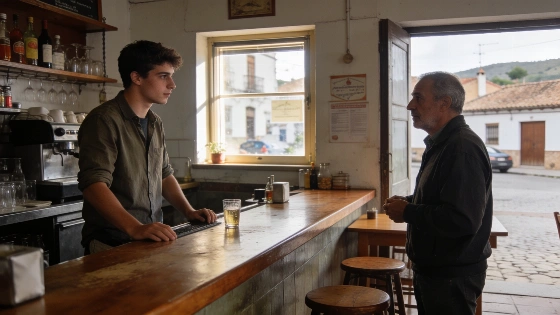
Bar Haro opened in the summer of 2025, reviving the name of the place where Mario’s father grew up. It has become more than a business: locals from across the area meet there, making it a daily gathering place in a region where such spaces are rare. The blend of tradition and new energy has brought life back to the village, though there are no official figures on revenue or visitors.
Support from neighbors has mattered. Mario describes an informal network of people willing to pitch in when something goes wrong, along with a sense of mutual aid that makes the challenges of running a business less lonely. It doesn’t replace professional services, but it does make things easier.
Regional authorities in Castilla-La Mancha have introduced programs to renovate rural housing and help with rental costs, aiming to lower barriers for newcomers and counter depopulation in areas like Cuenca.
El Español / El Digital Castilla-La Mancha
Still, the move comes with trade-offs. Mario says the lack of young people in the village is both a challenge and an chance. Many jobs once filled by older generations now go unclaimed, and keeping projects like his going takes more than cheap rent. Anyone considering a similar move has to weigh local transport and internet access, while also accounting for healthcare and seasonal demand. Affordable housing and work are real draws, but the details vary from place to place.
For Mario, success isn’t about growth or profits. He wants a stable life in Valdemoro-Sierra and hopes money worries won’t force him out. "For me, success is not having to leave the village," he says. His goal gets to the heart of Spain’s rural problem: making it possible for the next generation to stay.
Talent24h presented Mario’s story as a personal account, not a guarantee of success. It shows the gap between urban and rural Spain, as well as the potential of small communities for people willing to trade city comforts for a shot at independence. As city rents keep rising, places where a young entrepreneur can afford to take a risk may offer another path.