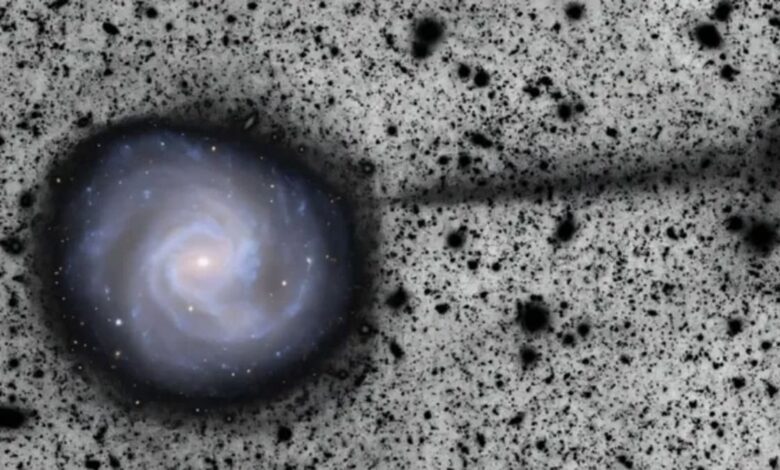
Astronomers working with the Vera Rubin Observatory have detected a unique phenomenon in the galaxy M61 (NGC 4303): an extended stellar stream whose length exceeds the diameter of the Milky Way. This structure stretches for 170,000 light-years and is about 10,000 light-years wide. For comparison, the visible part of our own galaxy spans around 100,000 light-years. Such discoveries are extremely rare, especially in well-studied objects like M61, which lies 55 million light-years from Earth.
Stellar streams are remnants of satellite galaxies that have been disrupted and absorbed by larger galaxies. In this case, scientists believe the discovered structure is the trace of a dwarf galaxy that once merged with M61. Such processes are key in shaping and developing galaxies, as well as influencing their internal dynamics.
The Impact of the Stellar Stream on the Galaxy’s Dynamics
Researchers point out that such a massive stellar stream can significantly affect the central regions of M61. In particular, its presence may trigger turbulent processes in the galactic core, alter the distribution of matter, and influence the activity of the supermassive black hole at the center. M61 is known for its barred spiral structure, making it similar to the Milky Way not only in appearance but also in internal configuration.
However, unlike the relatively calm black hole at the center of our Galaxy, the central object in M61 is actively absorbing surrounding matter and emitting powerful streams of energy. This may be linked to recent mergers and the influx of fresh material, including from the newly discovered stellar stream.
The significance of the discovery for astronomy and future research
The detection of such a massive stellar stream in one of the most studied galaxies raises new questions for scientists. Why has this structure gone unnoticed until now? What processes led to its formation, and how do they impact the evolution of M61? Answers to these questions will help us better understand how galaxies grow and interact with their environment.
The discovery made with the Vera Rubin Observatory highlights the importance of modern tools for exploring the universe. The new data will allow astronomers to revise existing models of galaxy formation and clarify the role of stellar streams in their histories. Additional observations are expected in the coming years, which will help uncover the nature of this unique phenomenon and its impact on the entire M61 galaxy.